

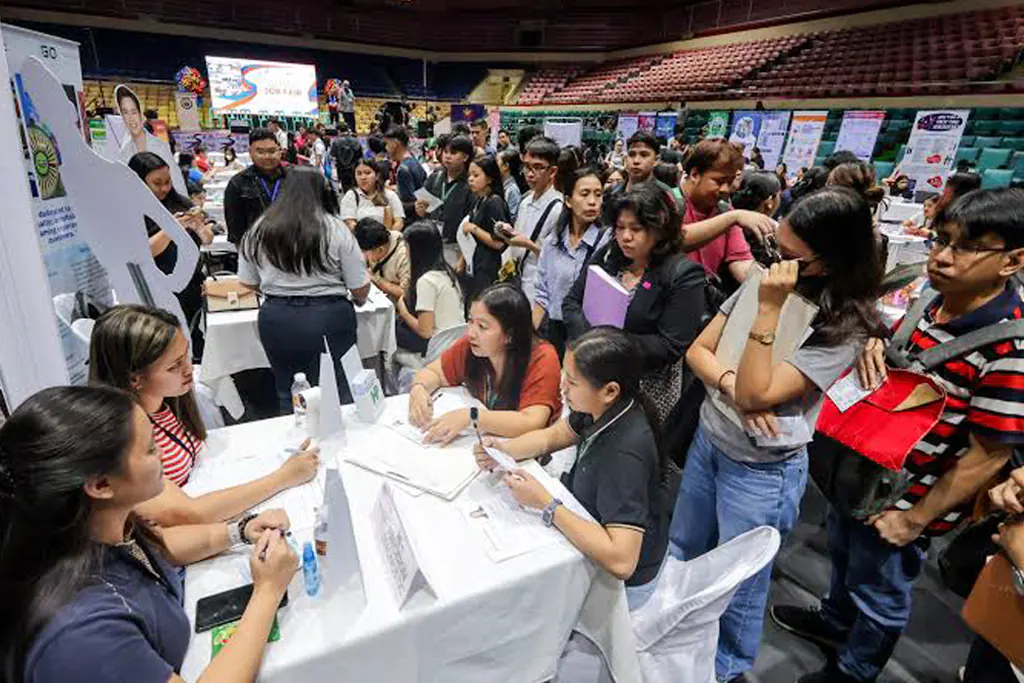
THE youth labor force — or those 15 to 24 – grew by 1.3 million from six million in July 2025 to 7.3 million in July 2025, but no jobs can absorb them.
Employable youth grew to 5.9 million (from 4.9 million) but employed youth grew by only 1.1 million, or a disparity of 4.8 million unemployed youth.
A think tank, IBON Foundation’s website on September 9 reported that more youth are seeking, but fail to find jobs. Last year, the youth labor force grew by 1.3 million from 6 million in July 2025 to 73 million in July 2026, including new labor entrants. Youth employment grew by 1.1 million from 4.9 million to 5.9 ,o;;opm. wjo;e underemployment, or those seeking more work or income, rose by 46,000 to 714,000.
IBON stressed that more youth are seeking work but are unable to find jobs. Youth unemployment rose by 276,000 to 1.4 million in July 2026 from 1.1 million last year. As it is, the youth unemployment rate reached 18.6%—more than three times the reported 6% overall and the highest under the Marcos administration.
Of the unemployed youth, almost 96% or 1.3 million are not in employment, education or training (NEET), up by 275,000 from 1 million last year.
The think tanks noted that the youth labor market distress extends beyond official unemployment with nearly 2 million more youth NEET but not counted as unemployed because they are outside the labor force.
The large number of young Filipinos neither working nor studying or training suggests poor opportunities to earn a living, build skills and improve their economic situation.
The group added that most new jobs created in July 2026 are part-time and informal,possibly indicating that many employed youth are likely settling for whatever work they can find.
Part-time workers surged by 2.7 million, accounting for most of the 3.2 million increase in employment in July 2026. Informal workers also grew by 2.4 million, making up 39% of total employed.
IBON said that worsening joblessness and increasingly poor job prospects among the youth underscores the government’s failure on foreign investment-driven strategy to create sustainable and decent employment.
Instead, a bold shift is needed towards strengthening domestic agriculture and Filipino industries to boost the economy, create decent work and ensure the future of Filipino youth, said the group.