

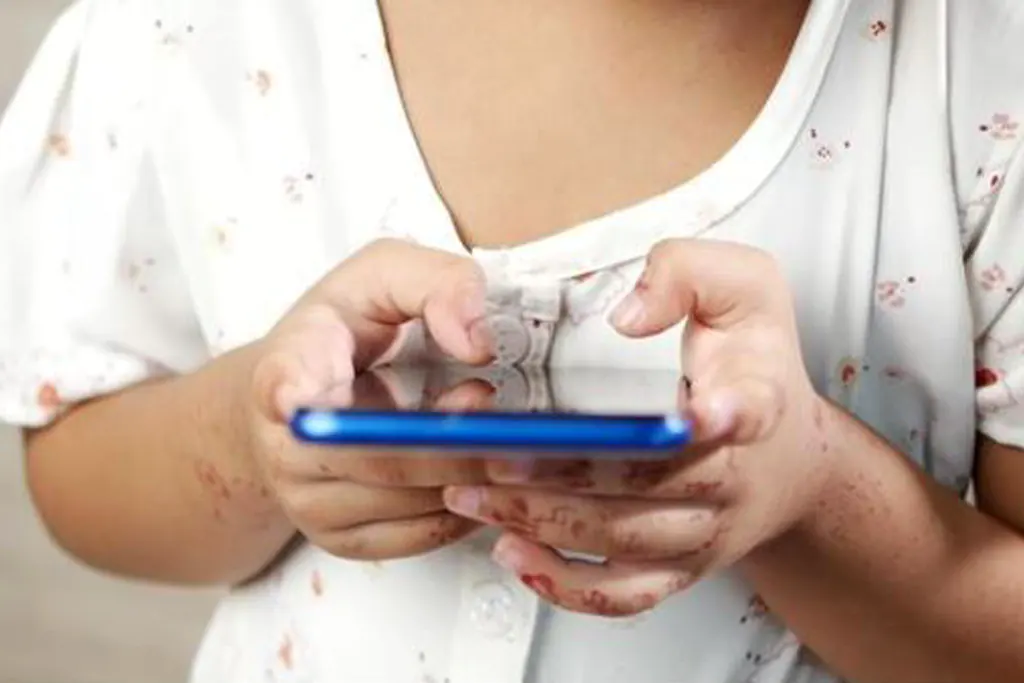
CONGRESSIONAL think tank—the Congressional Policy and Budget Research Department—is pushing for the passage of a measure to ban social media use for children under 13 years old. It cited that such a move is the constitutional duty for lawmakers amid the worsening impact of social media on mental, physical and social development.
The CPBRD cited in its policy brief that the Constitution requires the state to promote and protect children’s physical, moral, spiritual, intellectual and social well-being.
Multiple studies, it said, showed that social media has contributed to the rising occurrence of mental health issues among the youth.
A recent study in Belgium reported a correlation between usage patterns on Facebook and Instagram and depressive symptoms.
The CPBRD also flagged the ad-based model among social media networks, which is exposing children to algorithms meant to keep them scrolling. Further, there are concerns on social media sites becoming platforms for hate speech, which could inflame the youth.
Given social media’s lure for extended phone time, the CPBRD said “a growing body of research asserts that excessive use of social media is associated with notably poor sleep quality.”
The CPBRD noted that this is not the first time the government would be intervening to prevent children from accessing activities that may be lawful, but pose long-term risks.
Several countries have implemented or passed laws to ban or heavily restrict social media access for children and teenagers, starting with Australia becoming the first nation to ban major social platforms for under-16s in December 2025.
Countries with active bans or passed legislations on social media prohibition for children include Australia which banned for children under 16 platforms like TikTok, Instagram, Snapchat, and YouTube starting in December 2025, enforcing heavy fines on non-compliant tech companies.
Also part of the list are Indonesia which implemented a ban in March 2026 restricting users under 16 from accessing high-risk platforms like TikTok, Instagram, and Roblox; Brazil enacted the Digital Statute of Children and Adolescents in March 2026, requiring accounts for users under 16 to be linked to a parent or guardian alongside age verification and limits on addictive features.
France passed legislation in July 2026 banning social media access for minors under 15, with account blocking and creation restrictions slated through late 2026 and early 2027; Malaysia enforced in mid-2026 exclusion of children under 16 from major platforms; and Turkey passed a law in April 2026 barring children under 15 from social media.
Countries and Regions with proposed/pending bans include: United Kingdom which is moving toward a ban on social media access for children under 16; Greece is scheduled an under-15 social media ban to take effect on January 1, 2027; Norway & Denmark are preparing legislation and bills to ban social media access for children under 16 and 15, respectively.
Canada introduced federal digital safety legislation targeting a social media ban for those under 16; and Austria and Slovenia announced plans to ban social media for children under 14 and 15, respectively.
China, where the internet is tightly regulated by the state, has been restricting progressively minors’ access to social media since 2019. Initial measures imposed time limits and curfews on online gaming, before similar restrictions were extended in 2023 to social media and streaming platforms.
Indonesia has banned social media for under-16s since March and Malaysia has taken a similar approach, with legislation coming into force in June excluding under-16s from major platforms.
The United Arab Emirates announced a ban on social media for kids under-15 last month, with implementation set for around a year’s time.
Within the EU, the Greek government announced in early April that it intends to ban social media access for under-15s from January 1, 2027.
Germany’s Chancellor Friedrich Merz supports restricting or even banning social media for children, with an expert commission proposing two options: a ban graded by age or platform-specific restrictions.
A similar debate is under way in Sweden, where a government commission has proposed banning social media for under-15s by early 2028.
The Irish government has warned that it is considering legislating in the absence of an EU decision.
Outside the EU, the Norwegian government will present a bill by the end of the year to ban access for those under 16.
The UK is looking to ban social media for under-16s by early 2027.
Several states in India are considering restrictions for children and the government said it is holding discussions with platforms over potential measures.
The French parliament proposes to ban social media for children under 15 as the National Assembly approved the bill at first reading in January but the Senate later amended it to target only the most harmful platforms, prompting concern in Brussels. A final version of the legislation is expected in the coming weeks, with the government hoping it can come into force in September.
Portugal is considering a bill that would set the age for independent access to platforms, services, games and applications at 16.
In Italy, parliament is considering legislation that would ban social media use for children under the age of 15.