

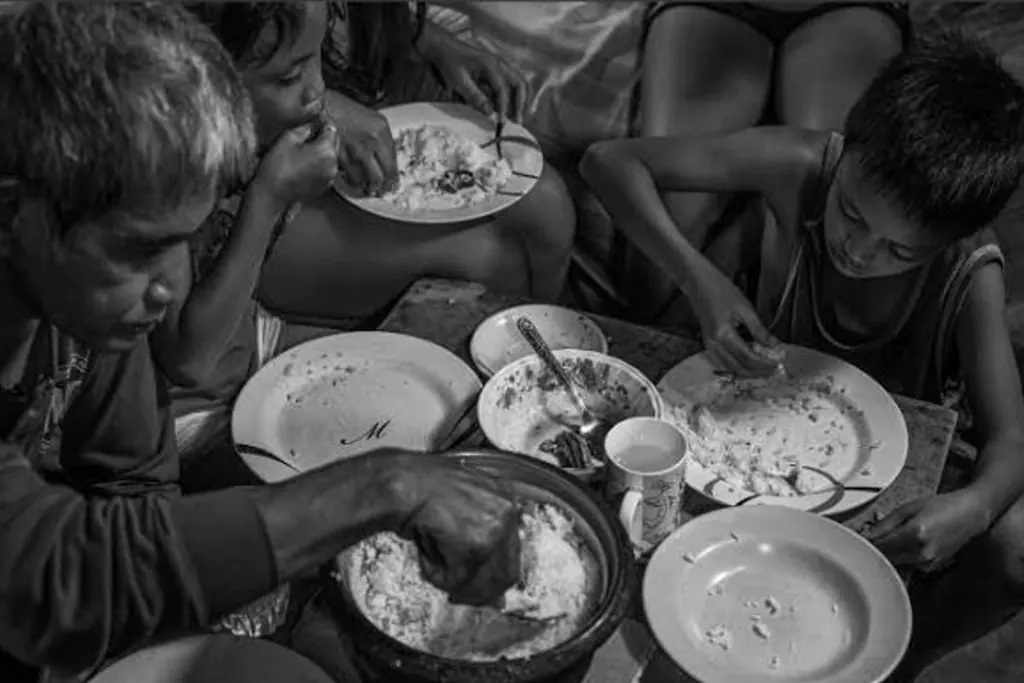
WITH September inflation surging to 7.2% households had to scrimp on food spending to be able to cope with other undeniably higher bills, transportation and other living expenses.
The level of hunger in September 2026 rose to 22.6 percent (up from 20.3 percent in June), based on the latest Social Weather Station (SWS) survey conducted from September 21 to 27.
Food inflation alone already accelerated to 6.7 percent in September, up from 4.6 percent in August, causing a surge in involuntary hunger — driven by vegetable prices rising 10.7 percent from a 3.4-percent decline in the previous month.
Rice inflation also soared to an over two-year high of 20.3 percent from 19.4 percent, state statisticians said.
“Moderate hunger” was highest in Metro Manila at 18.7 percent, up from 12.7 percent in June, followed by Mindanao at 18 percent (down from 20.7 percent), areas in Luzon outside Metro Manila at 16.3 percent (up from 13 percent) and the Visayas at 12 percent (down from 18.7 percent), the SWS report stated.
Metro Manila’s “severe hunger” was highest at 8.3 percent, unchanged from June. It was followed by areas in Luzon outside Metro Manila at 7.3 percent (up from 4.3 percent), Mindanao at 5.7 percent (up from 3.3 percent) and the Visayas at 4 percent (up from 3.7 percent).
Philippine Statistics Authority data show that inflation surged back to a three-year high of 7.2 percent in September as adverse weather and rising global oil prices fueled increases in food, utility and transport costs.
The September SWS survey also found that the rate of total hunger (moderate plus severe) among the self-rated poor rose from 24.5 percent in June to 27.9 percent, and rose among the self-rated food-poor from 29.9 percent to 33.2 percent. This is because their already rock-bottom income could no longer be stretched to feed an average family of five among the labor sector. It was steady among the not poor/borderline from 16.2 percent to 16.1 percent, and fell slightly among the food-not-poor/food borderline from 14.7 percent to 14.3 percent.
The survey used face-to-face interviews with 1,500 respondents and had sampling error margins of plus-or-minus 3 percent for national percentages, plus-or-minus 4 percent for Luzon outside Metro Manila, and plus-or-minus 6 percent each for Metro Manila, the Visayas and Mindanao.
The September score reflects the sharp rise in living costs that hit households during the period, and was also 1.5 percentage points above the 21.1-percent average recorded during the COVID-19 pandemic in 2020.
The survey also showed that the uptick in hunger was due to increases in Metro Manila and in Luzon outside of Metro Manila.
SWS defines involuntary hunger as being hungry and having nothing to eat at least once in the past three months.
Across the regions, hunger was highest in Metro Manila at 27 percent, an increase of 6 percentage points from 21 percent in June. This was followed by Mindanao at 23.7 percent (down from 24 percent), Luzon outside Metro Manila at 23.6 percent (up by 6.3 percentage points from 17.3 percent) and the Visayas at 16 percent (down 6.3 percentage points from 22.3 percent).
The September hunger rate was the sum of the 16.2 percent who experienced “moderate hunger” and the 6.4 percent who experienced “severe hunger.”
“Moderate hunger” refers to those who experienced hunger only once or a few times in the last three months, while “severe hunger” refers to those who experienced it often or always in the previous three months.
Compared to June, “moderate hunger” rose by 0.4 percentage points from 15.8 percent, while “severe hunger” rose by 1.9 percentage points from 4.5 percent.
Inflation was highest in April 2026 matching even the March 2023 level of 7.6 percent.
Average inflation from January to September 2026 breached the target of Bangko Sentral of three percent, hitting 5.4 percent
The high food inflation of 6.7 percent in September resulted from the enhanced monsoon rains that ravaged crops and harvests from Tropical Cyclones “Luis,” “Maymay,” “Neneng” and “Pilandok” had damaged P4.38 billion worth of agricultural produce nationwide.
Inflation in housing and utilities rose to 8.4 percent from 7.9 percent on higher rent, electricity and cooking gas prices.
Transport prices also continued to increase, with inflation in the basket jumping to 14.6 percent from 13.5 percent as gasoline and diesel prices once again shot up.
As it is, domestic pump prices rose three times in September amid renewed tensions in the Middle East, which drove global oil prices past $100 per barrel anew.
Carlo Asuncion, chief economist at UnionBank of the Philippines told Inquirer that the inflation surge was likely to be broader than seasonal as core inflation, which strips out volatile food and energy prices, rose to a nearly three-year high of 4.7 percent.
“Looking ahead, the emergence of a Super El Niño could prolong supply constraints in agriculture, potentially affecting crop yields, water availability, and food production,” Asuncion said.
“As a result, inflation risks remain tilted to the upside over the coming months, and while some volatility is typical during the latter part of the year, sustained weather disturbances could keep food inflation elevated and push overall inflation higher than currently expected,” he added.
Chinabank economists projected that with the Super El Niño, compounded by transport fare hikes, inflation will reach its peak in November.
“More provinces are projected to experience reduced rainfall beginning this month. Beyond potentially reducing agricultural output and driving food prices higher, drier conditions could also strain water supply and power generation, leading to higher utility costs.”