

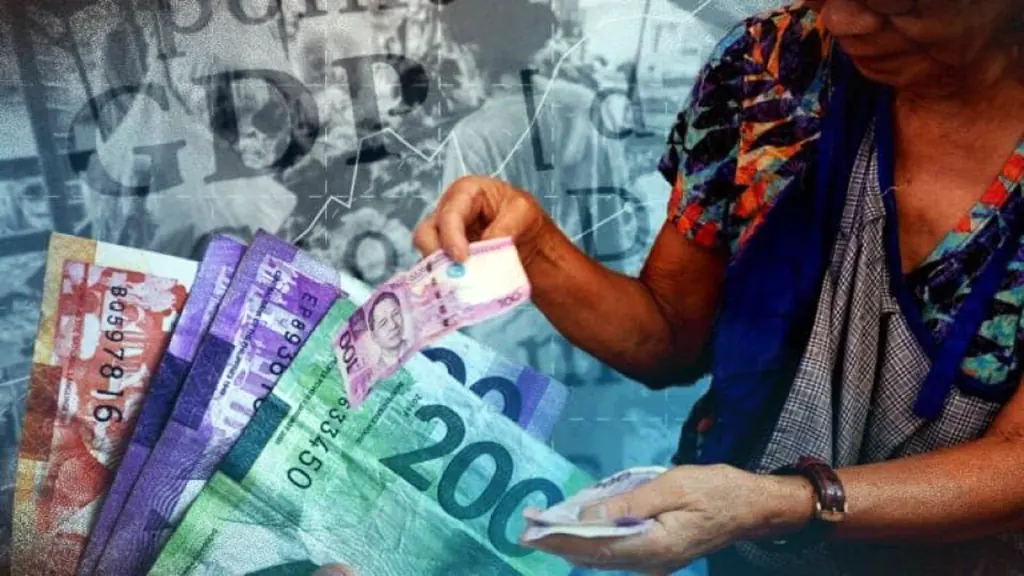
NOT even a possible rise in public spending – in anticipation of the national election in 2028 – would perk up consumer spending as households and labor would still brace for persistent elevated inflation, rising household debts and high borrowing costs.
This was the assessment of BMI Research, owned by Fitch Group headquartered in New York and London, in its Philippine Consumer Outlook report on real household spending that is expected to reach P14.2 trillion next year based on constant 2010 prices, or 27.2 percent above pre-pandemic levels in 2019, Business World.
BMI said it maintains a cautiously positive outlook for consumer spending in the Philippines, which would be helped by a tight labor market and the return of positive real wage growth for household purchasing power over the year.
Despite this, BMI said consumers are likely to remain cautious with their spending in 2027, prioritizing essential goods and services over discretionary purchases.
“Thus, consumers will seek out value-oriented options and become increasingly selective in their purchasing decisions throughout 2027,” it said.
Household final consumption expenditure inched up by 2.4% in the third quarter, marking sixth straight quarters of slowing growth, the newspaper added.
In the January-to-September period, household consumption growth averaged 2.8%, easing from 4.8% seen in the same period in 2025. In 2025, consumption expanded by 4.6%.
BMI warned that risks to the Philippines’ consumption outlook remain elevated.
“A more challenging US-Iran relationship could place upward pressure on energy prices, while a weak peso, severe El Niño conditions and widening second-round price effects could keep inflation sticky and unsettle inflation expectations,” it said.
Inflation accelerated to 7.8% in October from 7.2% in September. This brought the January-to-October average to 5.6%, above the Bangko Sentral ng Pilipinas’ 3% target.
BMI said it expects Philippine inflation to average 5.4% in 2027, easing from its 5.9% projection for this year.
It also expects the peso to weaken to an average of P62.70 against the dollar next year from the expected average of P61.20 in 2026.
BMI said prolonged inflation, particularly in food prices, could force households to allocate a larger share of their disposable income to essential goods and services.
“While nominal income growth will keep pace with inflation, prolonged inflation, particularly in relation to food, will mean that consumers will have to increasingly allocate a larger portion of their disposable income towards covering necessities,” it said.
BMI also said consumer confidence remained weak despite some improvement in the third quarter, when the index stood at -29.8.
“While this is a recovery from the six-year low reading in Q2 2026, this is still the worst performance of the indicator since Q1 2021,” BMI said.
It attributed the weak sentiment to higher fuel and food prices stemming from the Middle East conflict, weaker economic conditions, rising unemployment and the peso’s depreciation.
“Confidence was further undermined by concerns over governance issues and perceptions that government efforts to curb price pressures were inadequate,” it added.
Despite these challenges, BMI expects household purchasing power to continue improving, supported by higher real wages.
It projected real earnings to grow by an annual average of 4.4% through 2030, while household purchasing power is expected to be 19.5% higher in 2027 compared with 2019 levels.
But elevated household debt and high debt-servicing costs could limit the pace of consumption growth.
BMI noted that Philippine household debt remained manageable at 13.9% of gross domestic product (GDP) as of the second quarter of 2026, although higher borrowing costs could continue to strain household finances.
“Should energy-driven inflationary pressures prove more persistent, this could slow the pace of disinflation and, in some markets, increase the risk of a more hawkish policy stance,” it said.
“This would further prolong the strain on indebted households and weigh on consumer spending.”
Economist Ruben Carlo Asuncion of Union Bank said continued weakness in household spending could limit the pace of economic recovery in 2027 as household consumption remains the Philippines’ main growth engine.
“We expect some gradual improvement as inflation eases, but if spending stays subdued, stronger infrastructure execution, private investment, exports and services will need to provide more support. Overall, we see 2027 as a year of gradual rather than rapid recovery,” he said.
Francisco Cid L. Terosa, associate professor and former dean of the University of Asia and the Pacific School of Economics, said slower household consumption growth would weigh on overall economic growth next year, as household spending accounts for at least 73% of the country’s GDP.
“The momentum created by household consumption spending in the economy is irreplaceable. Hence, weak household consumption spending can hold down economic growth considerably,” he told Business World.
If household consumption remains weak next year, Terosa said sectors such as information technology and business process management, artificial intelligence-enabled services, financial services, wholesale and retail trade, electronics and related manufacturing, construction and public infrastructure, and renewable energy could help support growth.
But the ability of these sectors to support growth would depend on easing price pressures.
“The potential positive contributions of these sectors, particularly financial services, and trade, are conditional on lower inflation,” he said.
The BMI last week lowered its Philippine economic growth forecasts to 2.6% after the economy expanded by just 2.1% in the July-to-September period, the slowest quarterly performance since the 3.8% contraction in the first quarter of 2021 during the pandemic.
BMI’s projection for 2027 was lowered to 4% from 4.5%.
If realized, both figures would fall below the National Government’s growth targets of 3.5%-4.5% for 2026 and 5%-6% for 2027.