

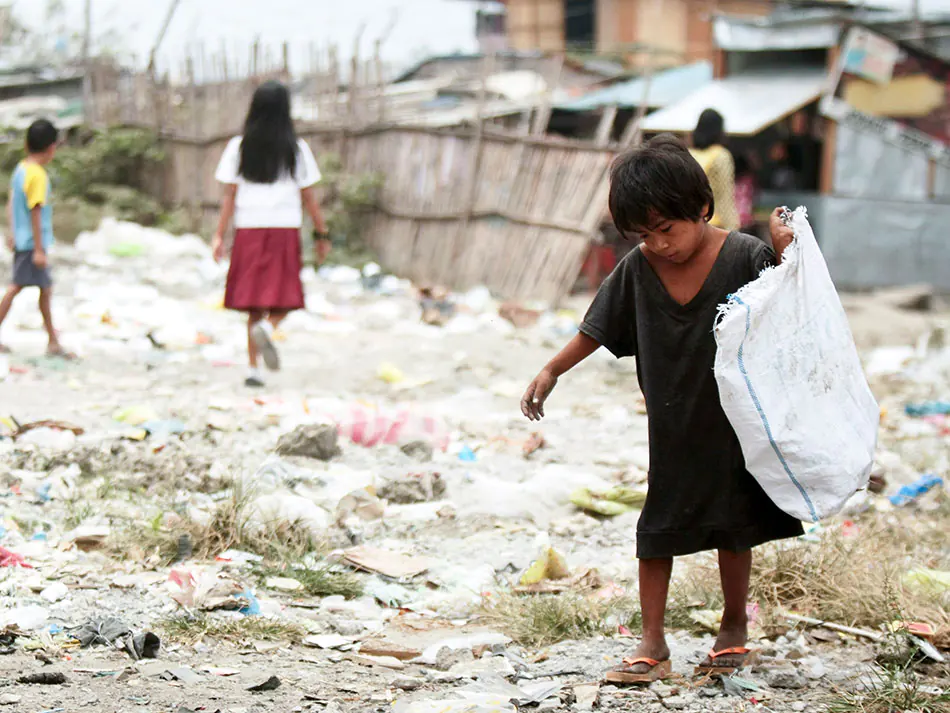
POLITICIANS for decades have been abusing the resilience narrative of Filipinos to mask their inefficiency, incompetence, lack of accountability and indifference.
They portray the hapless Filipino, during a crisis and catastrophe as resilient and able to cope with a smile even without their or others’ help. They give pittance relief goods and substandard living shelters from what they stole, in full view of photographers and videographers, to ensure that their image is that of a sympathetic and sensitive leader.
But a recent published survey showed that half of the Filipinos have grown weary about hearing this narrative in their lives, but are now demanding full accountability from their leaders, especially during crises.
‘Di pwedeng puro tiis na lang’: Pinoy resilience no excuse for poor gov’t service, says Tingog Partylist Rep. Jude Acidre, as he called for better coordination and accountability among agencies to prevent gaps in public service and infrastructure.
Acidre insists that good governance should be measured by effective service delivery, not just by the absence of corruption.
He emphasized that the government must stop treating the Filipinos’ signature resilience as a pass or excuse for delays, unfinished projects, and inadequate facilities and services, as he took the cudgels for his countrymen who are suffering from every policy blunder and defective implementation of programs and projects.
“Our people’s capacity to endure should never become the measure of the government’s capacity to serve,” he said during the 2026 International Conference for Public Administration at the Dusit Thani Manila.
Acidre stressed that public patience does not absolve government agencies of their responsibility to deliver efficient services, saying good governance should be measured by actual results, not merely by the absence of corruption.
“The absence of corruption does not necessarily mean the presence of good governance. Public service must also be judged by how well it is delivered,” he said.
As chair of the House Committee on Higher and Technical Education, Acidre stressed that government agencies must look beyond their individual mandates and ensure that their combined efforts translate into services that people can actually use.
He cited school construction as an example, where although it is the Department of Education (DepEd) that identifies classroom needs, construction may fall under another agency, with maintenance and repairs handled through separate funding and administrative arrangements.
This fragmented system can leave students without suitable classrooms even when the agencies involved have fulfilled their respective responsibilities.
“Our institutions may have separate mandates, but our people experience one government,” Acidre said.
He pointed out that ordinary Filipinos bear the consequences of these gaps through unusable classrooms, inaccessible services and time wasted waiting for the government to deliver.
“Accountability is not only about answering for what the government has done wrong. It is also about answering for what the government failed to do well,” said the Visayan lawmaker.
Acidre called for clearer accountability throughout the planning, construction, operation and maintenance of public infrastructure. He said agencies responsible for delivering services should help determine facility requirements, with technical experts ensuring that government investments serve their intended purpose.
Acidre also urged Congress to examine whether agencies have sufficient resources and capacity to implement laws effectively, and to identify operational failures before these cause prolonged hardship for the public.
He described administrative competence as an ethical obligation of public office, saying Filipinos should be able to depend on government institutions instead of constantly adjusting to their shortcomings.
“Our people’s patience should never become an excuse for government complacency. Their resilience should inspire us to build institutions that no longer require them to endure so much,” Acidre said.
The long-standing narrative of “Filipino resilience” is being rejected and debunked as a romanticized myth that normalizes suffering and shields systemic failures. The sentiment is even stronger among the youth, with 64% of those aged 18 to 24 pushing back against the term.
Criticism for the term resilience shifts the focus from systemic neglect, poor urban planning, and delayed infrastructure to individual grit. Lawmakers and advocacy groups note that the public’s capacity to endure (tiis) must never be used as a metric for a government’s capacity to serve.
Sociologists point out that resilience is rarely a voluntary cultural trait but an absolute survival mechanism. People smile or hustle through hardships because they have no other choice but it makes social injustice invisible behind a veneer of forced cheerfulness.
The pushback comes at a time when the population is severely drained by inflation and stagnant wages. The 2026 data shows that 46% of Filipinos have had to take out a loan just to cover basic daily necessities, and 45% report feeling too behaviorally and emotionally drained to even try getting ahead. Consumers are demanding actual systemic relief and financial stability rather than empty, tone-deaf praise for their “grit,” Business World reported.
Mental health advocates like MentalHealthPH frame continuous suffering as “natural endurance” inflicts severe collective psychological trauma. True recovery from frequent disasters requires trauma-informed governance, reliable safety nets, and institutional accountability—not just telling people to “bounce back” on their own.
A blog said that somewhere between praise and propaganda, resilience stopped being empowering—and started becoming a convenient excuse.
Every time disaster hits, Filipinos rebuild. We donate, volunteer, and organize community kitchens. We smile through grief and call it hope. But behind that collective display of strength lies an unconditional truth: we shouldn’t have to be this resilient in the first place, the blog asserted.
According to the World Health Organization (2025), exposure to repeated disasters increases the risk of depression, anxiety, and post-traumatic stress disorder (PTSD), especially in low-income populations [3]. In the Philippines—one of the world’s most disaster-prone countries—those mental health costs are rarely part of the national conversation.
We romanticize recovery. We frame survival as proof of character, not of systemic neglect and deceit, it noted. To unlearn toxic resilience, we must start by rejecting the idea that healing is an individual task. Mental health cannot thrive in systems that keep breaking people down, the blog continued.
The 2018 Mental Health Act (Republic Act No. 11036) was a crucial step forward. But its implementation remains uneven. Policies must move beyond awareness and into trauma-informed governance—disaster response protocols that prioritize psychosocial aid, community grief spaces, and long-term counseling for survivors.
Because resilience shouldn’t mean “tolerating pain.” It should mean having systems strong enough that people don’t have to tolerate pain.
Maybe it’s time to redefine what “Filipino strength” means, not as the ability to endure endless suffering, but as the courage to demand care.
To move beyond rhetoric and into real recovery, we must reimagine a state that defines care not as charity but as duty. The solutions exist within our policies, our people, and our collective capacity to demand better.
The Mental Health Act (RA 11036) must be properly implemented during emergencies, with budgets for trauma care in disaster plans and local government contingency funds. Disaster response must include psychological first aid, on-ground mental health teams, and long-term care—not just tents, food, relief goods and shelter.
Survivors deserve safe spaces to share, process, and rebuild together. Peer support, local mental health training, and culturally grounded therapy must be cultivated in barangays.
State accountability includes psychological recovery: trauma counseling for victims, protection for witnesses, and psychosocial programs within universities and advocacy spaces because civic engagement should never come at the cost of one’s peace of mind.
The myth of Filipino resilience may have helped us survive, but it has also silenced us. It taught us to smile through suffering instead of actively demanding accountability. Resilience “If your campaign is just praising their grit without offering actual value, you are going to sound completely tone-deaf,” he added.
The study also found that 44% of respondents lacked enough savings to cover three months without work, despite 69% maintaining an optimistic financial outlook.
The rejection of the resilience narrative was more pronounced among younger respondents, reaching 64% among those aged 18 to 24. By region, the figure stood at 59% in Mindanao and 56% in the Visayas, compared with 38% in Metro Manila.
The findings were based on a 15-minute online survey of 800 Filipinos aged 18 to 65 from urban areas nationwide in May 2026. The study used demographic weighting but noted that its findings may not fully reflect rural Filipinos and people with limited internet access.
During the study’s launch in Quezon City, Organic Intelligence Director for Development Communication and Communication Design Jason Ligot said institutions should stop placing the burden of coping with economic hardship on households.
“For duty bearers and public institutions, messaging can no longer shift the burden of survival onto the public. Celebrating resilience has to be replaced with demonstrating accountability, showing responsiveness and communicating the concrete actions being taken to ease the burden,” Mr. Ligot said.
“Dignity-first communication means acknowledging that extreme resilience is often a forced response to institutional failure,” he added.
The study found that financial pressures were also forcing consumers to reduce spending on leisure and other discretionary activities. Some 81% said they were attending fewer concerts and live shows, 78% were traveling internationally less, and 75% were going to cinemas less often. Meanwhile, 68% reported dining out less frequently.
About 23% of respondents said they were willing to give up anything if doing so would help them survive.
For consumers, tangible financial relief was more important than emotional messaging from brands. A price freeze was the most frequently cited measure that would make consumers feel a brand was on their side, at 27%, followed by smaller retail pack sizes at 16%, free shipping at 14%, promotional bundles at 12% and loyalty rewards for essential goods at 11%.
Only 35% of respondents were confident the Philippine government could shield them from the effects of the conflict in the Middle East, while 28% felt supported by the government amid the crisis.
Despite the pressures, the study recorded a national Resilience Index score of 82 out of 100. However, its authors cautioned that the high score should not be taken as evidence that households are thriving, as resilience may reflect the need to adapt to persistent hardship.
The study recommended addressing the structural causes of household vulnerability, investing in accessible public spaces, improving financial literacy and encouraging businesses to provide more responsive support to the communities they serve.
It argued that resilience should not be used as a substitute for institutional support, emphasizing the need to improve the conditions that allow Filipinos to recover from economic shocks rather than simply endure them.