

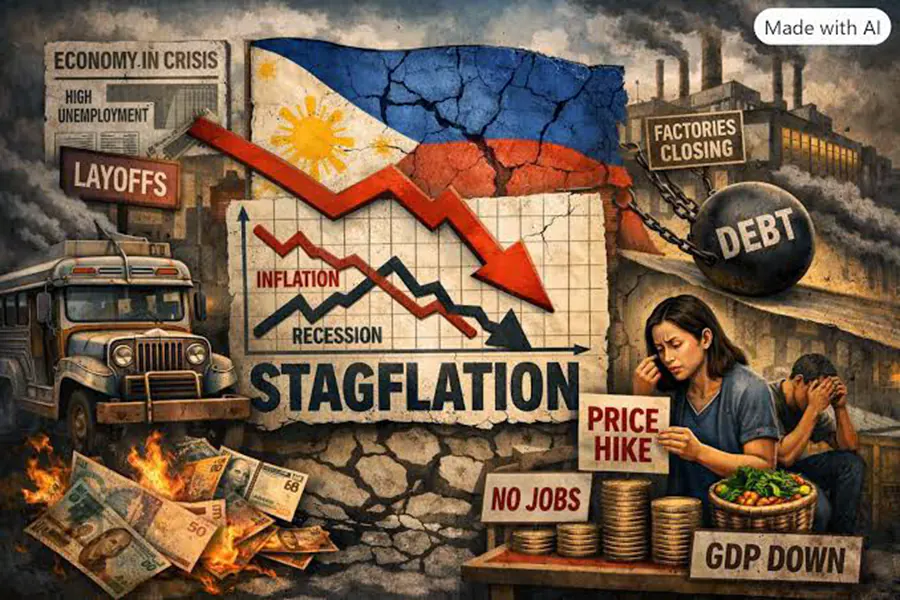
FACED with a rising debt and falling infrastructure spending, the Philippines has barely any room to revive its growth, unless the Marcos administration overhauls its spending and gears up for stronger tax collection.
Two former Bangko Sentral ng Pilipinas executives– former BSP Deputy Governor Diwa Guinigundo and Wilhelmina Manala, former Assistant Governor for International Monetary Affairs and Surveillance— on November 19 stated that persistent deficits and weakening public investment threaten the economy’s capacity to grow proof of which the third quarter 2026 GDP growth slowed to 2.1%.
Both of them now top executives of US-based GlobalSource Partners reported that national government debt neared the ratio of 67% of GDP by September, up from 63.2% in 2025. The January–September fiscal deficit reached about ₱1.3 trillion, against ₱1.1 trillion a year earlier, the report said.
Yet infrastructure and other capital outlays declined for a 14th consecutive month in August, falling 16.9% year on year to ₱70.5 billion. Spending dropped 21.3% from July.
“The Philippines needs fiscal quality, not merely fiscal quantity,” their report stated.
The report described the debt ratio as still manageable by many international standards but warned that rising debt-servicing costs leave fewer resources for infrastructure, education, health, and other priorities, Bilyonaryo quoted its report.
That limits the scope for a borrowing-funded stimulus even as weak investment weighs on growth. Construction expenditures contracted by 14.8% in the second quarter, the report said.
Infrastructure spending has slowed down as the government tightens scrutiny of projects, particularly flood-control works, amid concerns over substandard works or nonexistent projects.
Guinigundo and Manalac backed the investigations and procurement reviews but warned that prolonged delays in productive projects could hurt jobs, investment, and future growth.
Both urged the government to accelerate projects that meet economic, environmental, and governance standards while scrapping overpriced, unnecessary, or poorly designed works.
Better project selection, procurement, and monitoring would help stretch public funds. Stronger tax compliance and digitalized revenue administration could finance investment without excessive borrowing.
They also called for protecting education, health, skills, and digital investment. Without stronger domestic capabilities, opportunities arising from the Philippines’ ASEAN chairmanship may deliver limited economic gains.
Their prescription combines productive investment, cuts to low-value spending, and better revenue collection with a credible plan to narrow deficits and stabilize debt accumulation.