

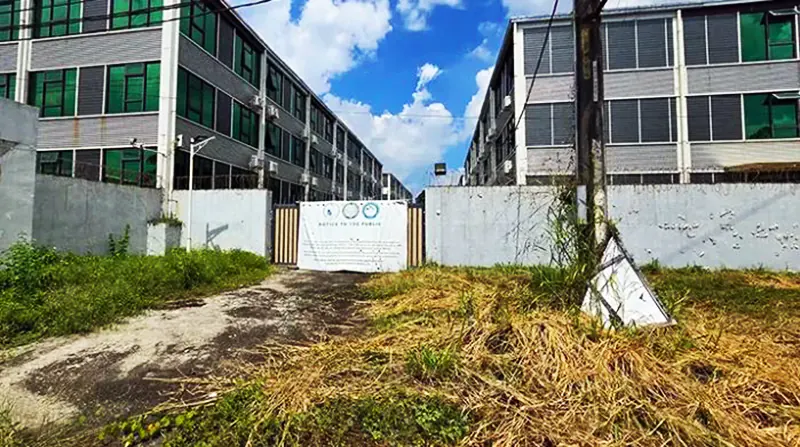
IN order to reduce the expenditures for government housing programs, an estimated 80,000 unsold condo units in the National Capital Region can benefit from converting these losing idle units into cash for government housing – perhaps not socialized housing as the units were built at very high cost, but for housing of government employees.
Amortization can be in the form of salary deductions and this would reduce the housing backlog that the national government has to address through the Department of Human Settlements and Urban Development and its attached agencies.
Senator Francis “Chiz” Escudero said in his podcast recently that an estimated 80,000 condominium units remain unsold– with the ban on Philippine Offshore Gaming Operations (POGOs) last year — in the National Capital Region (NCR) alone, according to a report.
Escudero said these units could be put to better use if integrated into the government’s housing program.
“Why build from scratch when there are already existing units that can be made available to our people?” Escudero said during his “Chiz Wiz!” podcast over the weekend.
He said that available housing stock might be “tapped more quickly through public-private collaboration.”
During the podcast, Escudero was joined by Department of Human Settlements and Urban Development (DHSUD) Undersecretary Marisol Anenias and Colliers Philippines Research Director Joey Roi Bondoc, who cited an estimated 80,000 unsold condominium units in the National Capital Region (NCR) alone. Such units, if left unoccupied for a long time, would just deteriorate faster, thus a waste of money.
They said many of these units were originally intended for the Philippine offshore gaming operator (POGO) market.
Escudero said the unsold condominium units could be integrated into the government’s housing program, adding that “existing real estate inventory should be tapped as part of broader efforts to make decent and affordable housing more accessible to Filipinos.”
Calling the present condition of the sector as a “housing paradox,” Escudero said that while thousands of condominium units remained unoccupied, millions of Filipinos continue to face a housing backlog.
He said this highlighted the need to better align existing housing supply with families’ housing needs and financial capacity.
Escudero, chairman of the Senate Committee on Urban Planning, Housing and Resettlement, said the government and developers should explore ways to integrate excess condominium inventory into the expanded Pambansang Pabahay para sa Pilipino (4PH) Program, allowing more families to acquire decent homes through existing residential units.
Anenias said the DHSUD already allowed developers to enroll their excess housing inventory in the 4PH Program, although this might require them to accept lower profit margins or absorb losses. (But maintaining the units as idle, the developers lose more and have a slim chance of recovering their investments).
“Housing is not simply a problem of supply. The bigger challenge is making homes affordable for ordinary Filipinos through financing terms they can realistically pay every month,” Escudero was quoted by Cebu Daily News.
To ensure affordability, Escudero is urging policymakers to explore ways to reduce monthly housing costs through improved financing mechanisms, subsidies, and longer repayment periods, while expanding affordable rental housing options for families who cannot yet afford to buy homes.
Escudero said the proposal was consistent with legislative efforts being pursued by the Senate Committee on Urban Planning, Housing and Resettlement to expand access to housing and strengthen the country’s housing framework.
Beyond housing production, Escudero said the government should also pursue measures to lower the overall cost of homeownership, encourage the productive use of existing housing inventory, and improve mass transit systems so more Filipinos could live outside major urban centers while maintaining access to employment opportunities.