


For many adults entering their 40s, long hours at a desk, little physical activity, sugary drinks, irregular sleep and weight gain can quietly become part of everyday life—and those habits can increase the risk of metabolic health problems, including fatty liver disease.
The condition can develop with few or no obvious symptoms, making it possible for people to go about their daily routines without realizing that excess fat is accumulating in the liver. Doctors may discover it through blood tests or imaging performed during a medical evaluation.
One working professional in her 40s experienced that reality firsthand after developing severe back pain and noticing weight gain. Her work routine involved spending as much as 18 hours a day in front of a laptop, with little exercise beyond getting up for coffee.
Coffee and soft drinks were consumed several times a day, while work and writing sometimes continued until 3 a.m.
The experience illustrates a familiar modern workplace problem: being constantly busy does not necessarily mean being physically active.
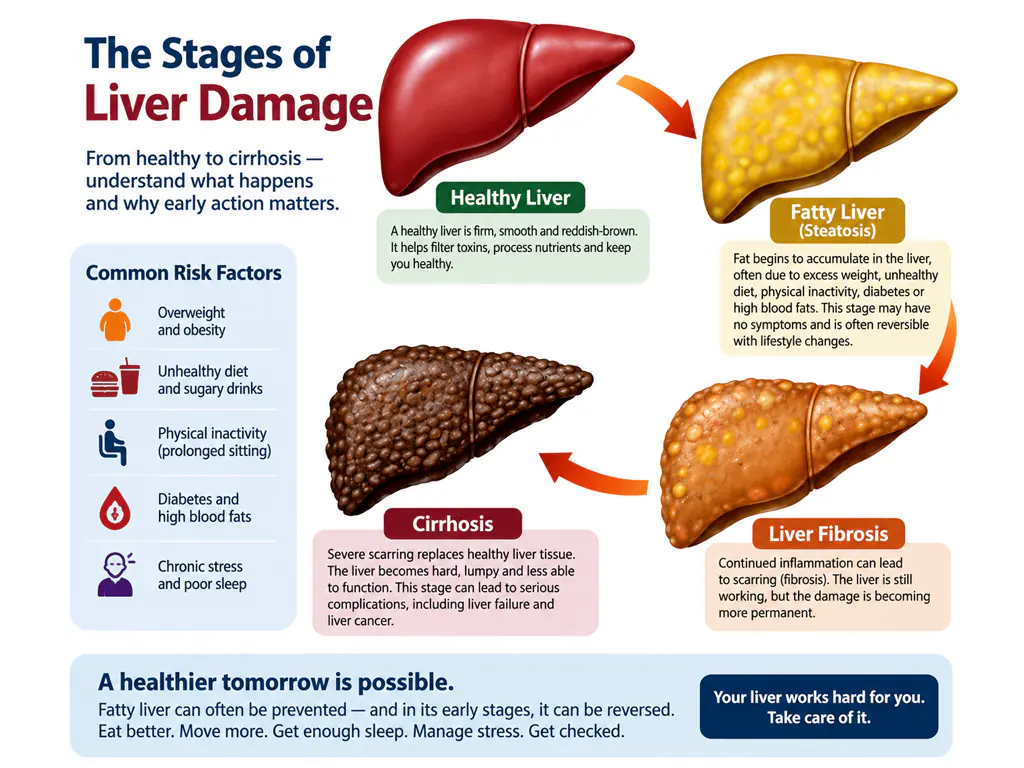
Fatty liver, now commonly referred to as metabolic dysfunction-associated steatotic liver disease (MASLD) when it is related to metabolic dysfunction rather than heavy alcohol use, involves excess fat accumulating in the liver. Risk is higher among people with overweight or obesity, insulin resistance, type 2 diabetes, abnormal blood fats and metabolic syndrome. Lack of physical activity and diets high in sugar or sugary beverages are also recognized lifestyle factors.
Stress deserves attention, but with an important distinction. Stress itself should not be presented as the direct cause of fatty liver. However, prolonged stress can affect sleep, eating patterns and physical activity, potentially contributing to behaviors and metabolic factors associated with the condition.
For office workers, prevention can begin with relatively practical changes.
Breaking up long periods of sitting with regular movement can help make a sedentary workday more active. Physical activity can also benefit people with fatty liver even when it does not result in weight loss.
Diet is another important factor. Health guidance recommends maintaining a healthy weight, controlling portions and limiting foods and drinks containing large amounts of added sugar, particularly sugary beverages. Fruits, vegetables and whole grains can form part of a healthier eating pattern.
For people who are overweight, gradual weight loss can reduce fat in the liver. NIDDK notes that losing at least 3% to 5% of body weight may reduce liver fat, while greater weight loss may provide additional benefits for liver inflammation and fibrosis.
Sleep and workload also deserve a place in the conversation. A lifestyle built around late-night work, constant screen time and little recovery can make healthy eating and regular movement more difficult.
Following her diagnosis, the worker began reducing her workload, cutting down on soft drinks and coffee, and ending the regular late-night work routine.
Her takeaway was less about giving up work and more about reconsidering priorities:
“Life is too short. Work can be found, but if you lose your life, nothing will come. I don’t want to die in my 40s. I still have more things to accomplish.”
For people spending most of their day behind a desk, the message is straightforward: health should not be treated as something to deal with after the deadline.
Sometimes, the first step is simply getting out of the chair.