

SENATOR Francis Pangilinan, chair of the Senate committee on agriculture, food and agrarian reform is enraged, as he questioned the timing of agricultural imports during the harvest season —a strategy benefiting only the traders and importers but leaves the farmers always at the losing end.
At the senate hearing, Pangilinan pointed to the recurring trend or pattern among government agencies in allowing imported rice and other agricultural products to enter the country during the local harvest season, thereby endangering the livelihood of farmers and undermining the country’s food security.
The recurring pattern of agricultural imports brings suspicion about whether the government policies and import decisions are really meant to protect the local producers or designed to benefit the few select importers and traders. Such ill-timed imports expose the farmers to unfair competition just as they are ready to deliver their produce to the local markets.
“Ang maliwanag, hindi dapat pumapasok yan ng harvest season, so we will look at the details of this,” he said in response to broadcaster Ted Failon’s recent radio interview about how the Department of Agriculture (DA) has been violating its own rules in allowing imported agricultural products during harvest season.
“Dahil talagang, pati sa onions nangyari ’yan. Naghearing kami noong March—last March—sa onions. May patakaran na dapat hindi na maglalabas tuwing anihan, pero ginawa pa rin—pumasok pa rin ang ilang tonelada na sibuyas noong December, January. Labag doon sa patakaran. Well, so far, mukhang modus operandi,” he said.
Pangilinan explained that the DA’s 60-day rule dictates that agricultural products must leave the port of origin within 60 days and that their release cannot coincide with the local harvest season to protect farmers from price drops.
“Hindi dapat pinapasok ang imported na bigas sa panahon ng anihan. Kasi tuwing nangyayari ‘yan bumabagsak ang presyo ng palay. Binibili—binebenta ng palugi, binibili ng napakamura ng mga trader at sila ang tiba-tiba, diba? So, kuwestiyonable itong dalawang pagpasok dahil third week na ng September. Ibig sabihin yan, hanggat maprocess yan, eh lalabas na yan October,” he pointed out.
The lawmaker (a farmer himself) said he will investigate an estimated P700 million worth of smuggled rice shipment seized in the ports of Davao and Limay, Bataan last month. “Gusto natin malaman ang puno’t dulo nito,” he stressed, adding that the investigation will most likely begin by the first week of November.
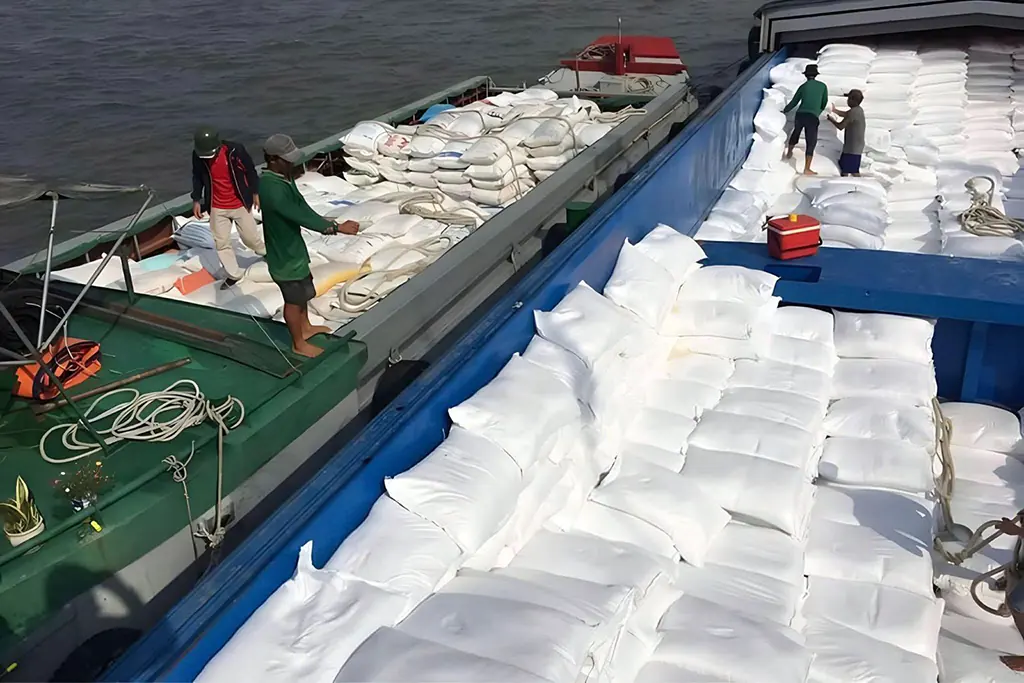
MV Tay Son 2, which was carrying 12,500 metric tons of rice, attempted to leave the Port of Davao without completing the required Customs processing, prompting the Philippine Navy to intercept and apprehend the vessel on the high seas, Business Mirror reported.
M/V Lucky Star, which was apprehended at the Port of Limay because its import permit was not consistent with the actual contents of the shipment, was found with nearly 7,500 metric tons of rice.
The two vessels are believed to be carrying a combined 20,000 metric tons of Vietnamese rice, with an estimated value of around P700 million based on the prevailing world market price of $420 per metric ton.
But amid the reported P700-million rice smuggling into the country through the ports of Davao and Limay, Pangilinan lamented that no big-time smugglers had been jailed despite Republic Act No. 12022, or the Anti-Agricultural Economic Sabotage Act.
Under RA 12022, agriculture smuggling amounting to P10 million and above would be classified as economic sabotage, a non-bailable criminal offense under existing jurisprudence.
The senator said he has already coordinated with the Department of Justice (DOJ), the Department of Agriculture (DA), the National Bureau of Investigation (NBI), and the Anti-Agricultural Economic Sabotage (AAES) Council regarding the shipments at the ports of Davao and Limay.
Under RA 12022, the government is mandated to strengthen measures against agricultural smuggling, hoarding, profiteering, and cartel. The law also empowers the Anti-Agricultural Economic Sabotage Council to coordinate the speedy investigations and prosecution of those responsible for these offenses, including any government officials found to have participated in the illegal activities.
He also announced that the committee report on the hearings he led earlier this year into the rampant smuggling of agricultural products, which allegedly involved high-ranking government officials, is expected to be released by the end of next month.
“That’s why the report will be coming out before the end of the month. Pasensyahan na lang tayo. We call it as we see it,” Pangilinan said.
“Kaya pag sinabi nating pasintabi nalang sa mga nasa gobyerno—pag sinabi nilang cartel hindi naman pwedeng mag exist yung cartel nang walang kasabwat sa gobyerno,” he added.
“Imported rice should not have been allowed to enter during the harvest season because whenever that happens, the price of rice drops. They buy it, and it’s sold at a loss. Traders buy it for a pittance, and they’re the ones raking in the huge profits, right?” he lamented.
Pangilinan cited the DA’s 60-day rule, which requires agricultural products to leave their port of origin within 60 days and bars their release in the country during the local harvest season.
“What is clear is, [imported agricultural products] should not be allowed during harvest season, so we will look at the details of this,” Pangilinan said, adding that the DA, under Secretary Francisco Tiu Laurel Jr., appeared to have violated its own policy.
He cited onion imports in December, which “shouldn’t be released during harvest season, but it was still done — a few tons of onions still came in in December, January. That’s against the policy. Well, so far, it seems to be the modus operandi,” he averred.
The DA has maintained that rice imports may be needed to ensure adequate domestic supplies, citing the risk of reduced farm output due to El Niño and extreme heat. It estimates the palay production to fall 700,000 to 1 million metric tons, depending on the weather’s impact on local harvests, the Inquirer reported.
The agency has also authorized fish imports to ensure adequate supplies during a temporary fishing ban. Meat imports remain open, while the DA has proposed increasing pork tariffs to protect local hog raisers amid declining farm-gate prices.
Pangilinan said the Senate will scrutinize whether import decisions and the enforcement of existing rules were consistent with the government’s responsibility to protect local producers while maintaining sufficient food supplies.
He also said the committee report on its earlier hearings into widespread agricultural smuggling, which allegedly involved high-ranking government officials, would be released soon.
“With all due respect to those in the government—when they say cartel, a cartel cannot exist without collusion with some people in the government,” he said as he called for the scrutiny of possible links between smugglers and public officials.