

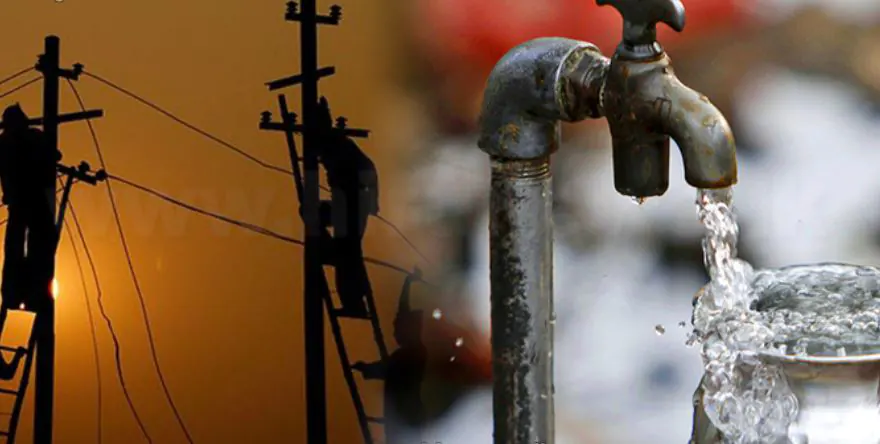
BY now, consumers are feeling the pinch of higher food prices but shortly, even electricity and water rates would go up because of the triple whammy – a slipping peso, rising fuel prices abroad and the effects of a Super El Nino, that is feared to last until the entire first quarter of 2027.
Already, Energy Secretary Sharon Garin (from Singapore) is prepping us to await higher electricity rates as the peso continues to depreciate (reaching P64 to $1 on Tuesday) which would drive up the cost of imported fuel for power generation.
According to Garin, the peso’s recent slide against the dollar could drive up electricity rates as the cost of imported coal, diesel, and liquefied natural gas (LNG) goes up.
“It will impact the rate of electricity because it passes through, so it will impact per KWH (kilowatt-hour,)” she said on the sidelines of the Singapore International Energy Week.
The Philippine peso closed at an all-time low of P64.17 per dollar on Tuesday, from the previous record low of P63.95 on Monday, data culled by Business World from the Bankers Association of the Philippines showed.
This marked the peso’s 38th record low this year and its ninth so far in October.
As a net fuel importer, the Philippines relies on foreign suppliers for much of its energy needs. A weaker peso means power producers and other fuel buyers need more pesos to pay for coal, natural gas, and diesel imports.
These higher costs could eventually be passed on to electricity consumers through their monthly bills.
Garin disclosed that the Department of Energy (DOE) will coordinate with the Energy Regulatory Commission (ERC) to explore measures to cushion the impact of higher costs stemming from the peso depreciation.
“We have the oil crisis. We have the currency [depreciation]. We have the El Niño and the coming summer. This is not the best time to be [Energy] secretary, [but] we try to work out as much as possible to minimize the impact,” she said.
Last week, the Philippine Atmospheric, Geophysical and Astronomical Services Administration said a strong to very strong El Niño is active in the Tropical Pacific. It is expected to peak before the year ends and last until the first quarter of 2027.
El Niño typically causes severe dry conditions to parts of the country, threatening water supply and posing risks to the country’s hydropower capacity. Hydropower accounts for less than 20% of the country’s total electricity generation.
“Indirectly it will affect prices… It will affect coal, it will affect diesel, it will affect LNG because they are in dollar terms so it will impact the rate of electricity because it’s pass-through, so it will impact per kilowatt-hour,” the DoE chief told reporters.
With the weaker peso driving up import costs for petroleum products, Garin said the government may ask oil companies to stagger the possible pump price adjustments.
“We’ll ask them [oil companies] once we see the computations this week — what is the impact — and then we can ask. Normally, they follow, but hopefully, it won’t be necessary anymore,” she noted.
Since the outbreak of the US-Iran war in late February, domestic oil prices have surged to record highs, reaching as much as P170 per liter. On a year-to-date basis, pump prices have risen by a net P68.85 per liter for gasoline, P64.43 for diesel, and P62.76 for kerosene.
Juan Paolo E. Colet, managing director at China Bank Capital Corp., said power generation companies that rely heavily on foreign exchange (forex) rate sensitive fuels like oil and LNG will face increased costs, noting that local power companies that have US dollar-denominated debts may also see their debt service costs rise.
“These costs will ultimately be passed on to consumers,” Colet told BusinessWorld.
“Careful forex hedging strategies may help cushion the impact of currency movements.”
As the country experiences a very strong El Niño, Garin said the issue would go beyond the energy sector and require coordination among government agencies.
Garin then claimed that the DOE is coordinating with other government agencies such as the Department of Environment and Natural Resources, Department of Agriculture or Department of Transportation to potentially provide assistance.
“If there’s really the impact of El Niño and all else, that is also a whole-of-government approach because that will uplift the El Niño activities of the government,” she averred.
Garin also hinted at meeting ERC chairman Francis Saturnino Juan to discuss ways to cushion consumers from higher electricity costs.
The DOE may also ask oil companies to stagger weekly fuel price increases, depending on market price calculations, Bilyonaryo quoted her.
“Although I have to thank the oil companies because they’ve complied with the limits on the range prescribed by the DOE. Regarding the staggering, we’ll ask them again once we see the computations this week,” she added.
If energy prices rise sharply, the government could consider targeted subsidies for affected sectors, including agriculture and public transportation, under its UPLIFT framework, Garin said. No formal request has been submitted to the Cabinet.
Garin highlighted the Philippines’ vulnerability to global energy market disruptions and the need to diversify power sources and accelerate grid investments.
“In this environment, energy security means energy we can rely on, afford, and receive when our people and economies need it most,” she quipped.