

THREE past presidents pampered Cagayan province with hugely-funded projects that later on turned out to be white elephants and complete losses for the economy. They were Presidents Fidel V. Ramos, Gloria Macapagal Arroyo and Rodrigo Roa Duterte.
But the pampering continues until today under the Marcos Jr. administration, who was the last boss of the late Presidential Legal chief Juan Ponce Enrile (whose daughter is now heading most of the white elephant projects in the province).
The projects that are now being scrutinized by the Commission on Audit for their benefits, if any, to the local and national economies (considering they were funded by the treasury) are the Cagayan Export Zone Authority, the Cagayan North International Airport and the Cagayan Golf Course.
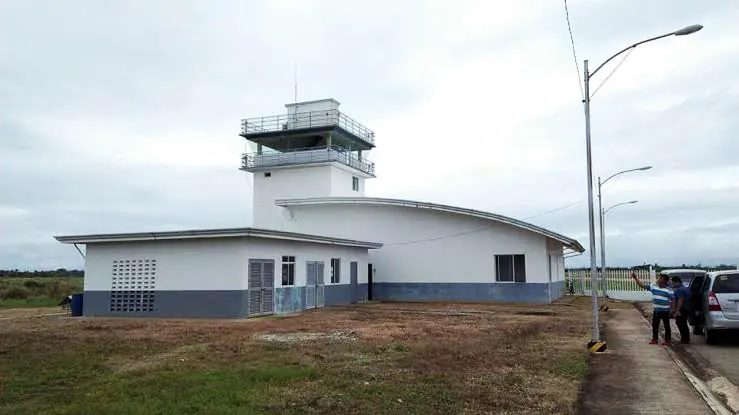
The Cagayan North International Airport in Lal-lo, which the government funded for P691 million has yielded zero dividends in 16 years, according to the COA report. It was later designated as a site for the Philippine-US Defense cooperation (considering its nearness to Taiwan) but it has yet to start as a regular commercial operation and declare any dividends, according to the Bilyonaryo.
The CoA 2025 audit report also flagged the idle Cagayan Economic Zone Authority’s (CEZA) investment. The airport was developed in 2009 to support tourism, trade and economic growth in Northern Luzon but has since gained strategic importance under the Enhanced Defense Cooperation Agreement (EDCA). “To date, it has primarily served chartered flights and is not yet available for commercial operation,” COA said.
The airport was developed through a joint venture formed on September 10, 2009, between CEZA and Cagayan Land Property Development Corp. (CLPDC), a private company historically linked to the Leisure & Resorts World gaming group, now known as DigiPlus.
The original agreement called for CEZA to contribute ₱691 million and CLPDC ₱966 million toward the project’s ₱1.657 billion capitalization. The arrangement was amended in 2017 to provide for equal ownership.
The joint venture company, Cagayan Premium Ventures Development Corp. (CPVDC), was supposed to distribute profits from airport operations to its shareholders.
“Net income from the operation of the CNIA shall be distributed as dividends to the parties, CEZA and CLPDC. To date, CPVDC has not declared any dividends,” COA said.
CEZA’s financial statements showed that its ₱691 million investment remained unchanged as of December 31, 2025.
The airport was envisioned as a gateway for tourism, trade and cargo shipments to Northern Luzon. It has since been designated as a site under EDCA, which allows American forces access to agreed Philippine military facilities.
Its location near the Luzon Strait and Taiwan gives the facility strategic importance amid regional security tensions.
Defense Secretary Gilberto Teodoro visited the airport in August 2023 during joint disaster-response operations and called for faster development of its facilities. Despite the airport’s defense role, CEZA’s 2025 financial statements showed no declared dividends from the joint venture. The audit did not specify whether military use generated income for the airport operator, Bilyonaryo noted.
The long-idle investment comes as CEZA struggles with mounting losses.
The government corporation reported a ₱307.5 million net loss in 2025, compared with ₱173 million in 2024. Its retained earnings fell to a negative ₱199.7 million after six consecutive years of losses.
The ₱691 million airport investment alone was more than twice CEZA’s ₱286.9 million revenue in 2025.
COA recommended that management “come up with a concrete plan to address its idle investment in the Joint Venture in the operation of the Cagayan North International Airport.”
CEZA management committed to prepare such a plan.
The absence of dividends does not necessarily mean the airport has generated no revenue or that the investment has been lost. The audit did not disclose CPVDC’s profitability or establish when regular commercial flights would begin, Bilyonaryo added.
Similarly, CEZA’s six year continued losses under Katrina Ponce-Enrile (JPE’s) daughter when 80 registered firms left. So the P1.2 billion investment was wiped out, COA said. Its registered businesses plunged from 137 to 57, prompting state auditors to question whether the freeport operators’ business model had become obsolete or if management failed to adapt, Bilyonaryo stated.
The Lal-lo International Airport was formed through a joint venture agreement on September 10, 2009 (under FVR), and officially began operations on October 12,2014 with the approval by the Civil Aviation Authority of the Philippines (under then President Benigno Simeon Aquino III). Total funding for the airport was P1.657 to P1.67 billion with JV partners CEZA which contributed P691 million and P966 million through Cagayan Land Property Development Corp (now DigiPlus-linked) under a 48-52 sharing scheme.
As for the CESA, the COA observed its processing fee collection collapsed 99.7 percent since 2019, while the agency continued to exceed its spending budget despite its shrinking business base.
“This pattern of underperformance may suggest that CEZA’s revenue targets are unrealistic, its business model is obsolete, or it is failing to adapt to market changes,” COA said.
CEZA’s retained earnings plunged from ₱994.3 million in 2019 to a deficit of ₱199.7 million in 2025, a ₱1.19 billion deterioration that wiped out its accumulated earnings and pushed the account into negative territory.
The financial decline was accompanied by persistent spending overruns. In 2025 alone, COA recorded ₱596.21 million in actual expenses against a ₱362.49 million budget, an overrun of ₱233.73 million.
Auditors cited “weaknesses in budgetary planning, expenditure control, and monitoring mechanisms.”
The decline also gutted its interactive gaming operations, with licensees falling from 33 to 10 and working visa issuances dropping from more than 1,000 annually to zero.
Visa-related revenue plunged 98 percent, although gaming licensing fees remained a significant source of income. COA traced part of the deterioration to tighter regulations governing online gaming.
Executive Order No. 13, issued in February 2017, restricted gambling activities outside the territorial jurisdiction of the licensing authority. CEZA subsequently tightened its licensing requirements after discovering an alleged investment scam involving one of its licensees.
The agency enjoyed a temporary windfall in 2018 from financial technology registrations, when processing-fee collections reached ₱476.32 million. But the fintech boom proved short-lived. COA found that business registrations had already begun declining before the COVID-19 pandemic.
The November 2024 ban on POGOs created additional uncertainty for CEZA’s remaining interactive gaming licensees, even as its management maintained that no POGOs were operating within CEZA.
In March 2025, CEZA replaced its previous gaming licensing fee structure, based on a percentage of gross gaming revenue, with fixed charges in an attempt to remain competitive.The changes failed to reverse CEZA’s financial bleeding under Ponce Enrile, who was appointed by Marcos Jr. in May 2023.
Although Enrile inherited an agency already struggling with declining revenues and mounting losses, its finances continued to worsen under her leadership.CEZA’s net loss surged 78 percent to ₱307.5 million in 2025 from ₱172.98 million in 2024, as revenue fell to ₱286.86 million against expenses of ₱555.05 million.
The national government also injected ₱265.18 million in equity in 2025, but the additional capital failed to prevent CEZA’s retained earnings from turning negative.
More than three years into Enrile’s tenure, the agency has yet to reverse its losses or restore its shrinking business base.
Management’s excuse was that despite CEZA’s recurring losses, missed revenue targets and rising expenses attributed its financial difficulties and regulatory restrictions, the pandemic, weaker demand and increasing operating costs. Still, it maintained essential personnel and services
COA recommended a comprehensive financial viability assessment, stronger revenue generation and collection measures, tighter spending controls and a plan to address the airport investment.
It warned that CEZA’s cumulative losses had already exceeded the earnings accumulated since its creation, raising questions about whether the agency could continue operating “absent continued financial support from the National Government.”
Cagayan Economic Zone Authority (CEZA) spent ₱73.84 million building a golf facility that took more than four extra years to finish, never opened for business and was damaged by typhoons without government insurance.
CEZA management admitted that the driving range and three-hole golf course in Santa Ana, Cagayan, was “commercially unviable” because of its flawed design and lack of essential operating amenities.
Based on documents obtained by Bilyonaryo, state auditors said the project, awarded in May 2019 under former CEZA administrator Raul Lambino, was supposed to be completed by November 2019. But construction dragged on until April 2024, during the administration of Ponce Enrile, who took over CEZA in June 2023. CEZA imposed ₱2.14 million in liquidated damages on the contractor.
But even after completion, the driving range and three-hole golf course never opened for business. Management acknowledged that the facility lacked essential amenities, staffing and operating arrangements, leaving it with little prospect of attracting customers or investors.
Rather than operate the driving range as originally intended, CEZA’s board approved its conversion into an enterprise center for leasing on April 30, 2024.
The property remained idle when Typhoons Marce and Ofel struck Cagayan seven months later, causing an estimated ₱1.92 million in damage to the driving range building.
Compounding the damage, CEZA had failed to insure the completed facility through the Government Service Insurance System (GSIS) claiming the insurance could not be obtained because the project had not been formally accepted.
COA rejected the explanation, citing a contract provision that deemed the project accepted if CEZA raised no objections within 10 days of turnover.
Auditors described management as “remiss” in securing the necessary insurance documentation, depriving the government of potential compensation.
During an August 2025 inspection, COA found that the damaged building remained unrepaired and the golf course unused. Management cited funding constraints for the lack of rehabilitation.
COA warned that the neglect resulted in “further deterioration and wastage of public funds.”
After spending ₱73.84 million on a golf facility that never opened for business, CEZA now wants to turn it into a shooting range.
According to COA, management is in “advanced discussions with a private entity” to develop the property into an “international Shooting Range,” with the prospective lessee financing repairs and maintenance, Bilyonaryo reported.