

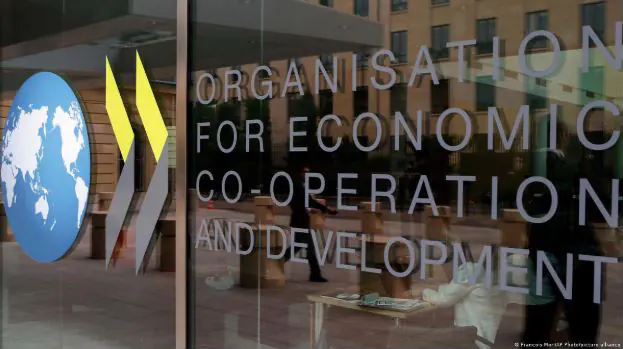
PARIS-BASED Organization for Economic Co-operation and Development, an international intergovernmental organization of 38 member-nations, urged the Philippine government to review and update its state ownership policies to ensure accountability and discard perceptions of preferential treatments to government-owned and controlled corporations.
The OECD found that government entities exercising ownership functions over GOCCs perform sectoral policy-making functions that “can potentially create conflicting mandates, blur accountability, and give rise to perceptions of preferential treatment.”
Founded on Sept. 30, 1961, the OECD acts as a policy forum, data clearinghouse and think tanks where member democracies with market economies analyze and coordinate policies on taxation, education, trade, the environment and others.
The OECD said the review of state ownership policy will strengthen oversight and accountability. The Philippines, along with Colombia and Denmark, were among the jurisdictions with a single high-level state ownership policy that had not been reviewed in at least six years, the Business World reported.
“Regular review and updating of state ownership policies is important to keep ownership rationales, objectives and oversight practices aligned with evolving priorities,” the OECD said in its 2026 Ownership and Governance of State-Owned Enterprises report.
“It also enables improved oversight tools to inform decisions, such as on future acquisitions or divestments,” it added.
The Philippines was also among the 23% of jurisdictions that do not have a mandatory or recommended minimum number of independent directors on boards of state-owned enterprises (SOEs).
Across the surveyed economies, only 54% required a minimum number of independent directors, while 45% prohibited political office holders from serving on SOE boards.
As of end-June 2026, the Philippines had 124 active GOCCs. This includes the Social Security System, Government Service Insurance System, Maharlika Investment Corp., Land Bank of the Philippines, Development Bank of the Philippines, Philippine Amusement and Gaming Corp., and Bases Conversion Development Authority.
The OECD report, which examined SOE governance practices across 58 economies, found that only 43% of surveyed jurisdictions had a single government-wide ownership policy, while 42% reported separating state ownership functions from policymaking and regulation.
“SOEs are playing a growing role in the global economy, with the assets of large nonfinancial SOEs nearly doubling in real terms over the past decade,” the OECD said.
In 2024, the OECD said 33,834 SOEs held a combined $141 trillion in assets, equivalent to 126% of global gross domestic product, and employed around 43 million people.
Emerging economies accounted for 80% of global SOE assets and 83% of SOE employment.
However, the OECD found that SOEs were generally less profitable and more highly leveraged than their private sector counterparts.
“SOEs are less profitable overall, with their median return on equity over 2013-2024 averaging 4.7%, compared with 6.4% among non-SOEs across the six industries examined,” it said.
SOEs also generally invested less in research and development and fixed assets, although the results varied across regions and industries.
“Given SOEs’ growing economic footprint, these differences can have broader implications for productivity, competitiveness and growth,” the OECD said.
The OECD also noted gaps in transparency and anti-corruption safeguards, with only about one-third of surveyed SOEs systematically monitoring information received from SOEs on compliance and integrity matters.
For the Philippines, the report identified the Governance Commission for GOCCs as a state ownership coordinating body and noted that the country maintained an online inventory of state enterprises.
The OECD called for clearer separation of state ownership, policymaking and regulatory functions, stronger SOE board independence and greater transparency on enterprise performance and government support.