

FOR the people calling shots in the Department of Agriculture (DA), neither shame nor call for accountability seemed enough to make them leave — at the very least, take a leave.
The recent controversy dragged no less than Agriculture Secretary Francisco Tiu Laurel, in what looks more like a “conflict of interest” over a P700-million rice importation from Japan.
As previously reported, the importation, which was covered with appropriate clearance and permit issued by the Bureau of Plant Industry (BPI), involved a company allegedly chaired by the Secretary himself.
In a statement, the Federation of Free Farmers urged Tiu Laurel to take a leave of absence pending the results of an investigation, which the DA boss himself called for.
Aside from Tiu Laurel, likewise called to take a leave are the officials of the bureau which issued permits to a private company supposedly linked with the DA Secretary.
Taking cue from previous controversies, government officials are either resigning or taking a leave of absence at the very least, if only to allow an impartial investigation into the supposed mess.
However, Tiu Laurel argued that it was him who ordered the revocation of the permit — but only after the shipment landed in Philippine shores.
The farmers group however insisted that the DA secretary take a leave “for how else would the underlings and staff make an impartial statement with the boss around. Naturally they would be tight-lipped for fear of losing their jobs.”
The DA on Wednesday said Laurel ordered the revocation of the sanitary and phytosanitary import permits for a vessel carrying the controversial rice from Vietnam before it arrived. The vessel with the cargo intact, tried to leave the Port of Davao.
Laurel claimed the permit was canceled at the request of Planters Product Inc. (PPI) – a company where he holds 79 percent stocks – that was importing 25% broken rice but other reports claimed the vessel contained 5% brokens.
He added that PPI had told him the import contract had already expired because the delivery was originally scheduled for July.
PPI’s document dated Oct. 7, 2024, identified Laurel as chairman of Planters Foundation Inc., the company’s principal stockholder, which holds 79.24% of PPI’s shares.
During a Senate session on Oct. 8, Sen. Francis Pangilinan said about 20,000 metric tons of Vietnamese rice had been seized from two vessels on Sept. 17 and Sept. 21, with the shipments valued at about P700 million.
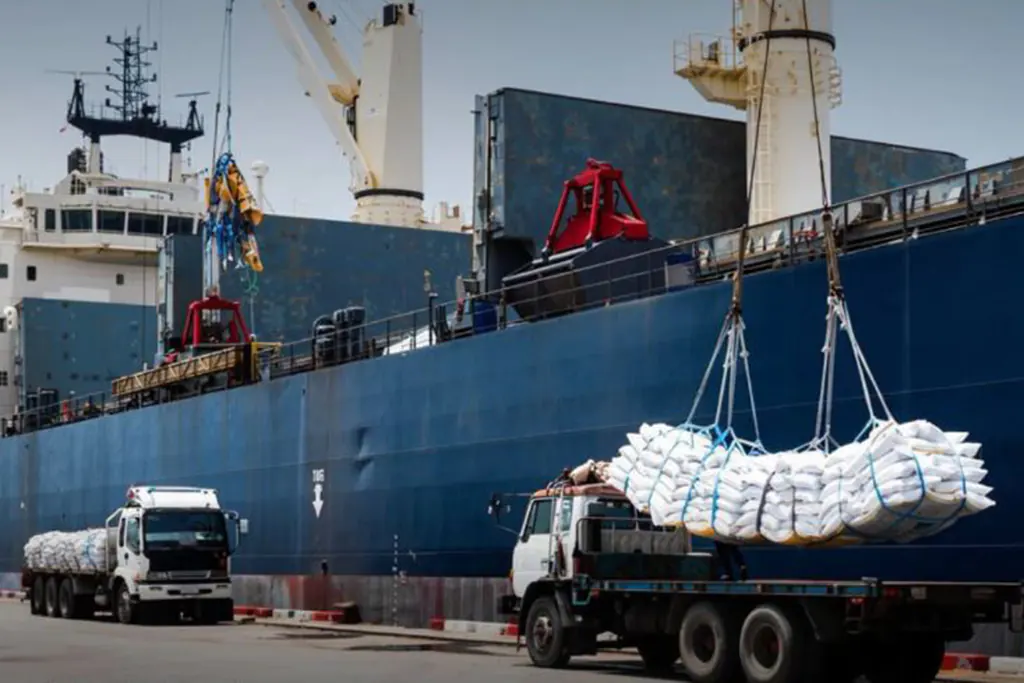
The Bureau of Customs (BOC) said it had apprehended the MV Tay Son 2 and MV Lucky Star with the assistance of the DA and the Philippine Navy over the cancellation of their sanitary permits and possible violations of permit conditions. The MV Tay Son 2 was carrying 12,500 metric tons of rice, while the MV Lucky Star, which was intercepted in Limay, Bataan, with 7,500 metric tons, the Inquirer reported.
In a separate ambush interview on Wednesday, BOC Commissioner Ariel Nepomuceno said the MV Tay Son 2 tried to leave the Port of Davao without undergoing mandatory inspections by Customs personnel. He said the vessel’s permit had been canceled after it left Vietnam, although it had a valid permit when it departed.
Nepomuceno added that after the vessel left the Davao port, the BOC sought assistance from the Philippine Coast Guard and the Philippine Navy to accost it. Laurel said that after learning of the vessel’s departure, he instructed the DA’s Inspectorate and Enforcement Office to issue a hold order on the cargo.
Nepomuceno said he spoke with Laurel about the shipment and that the latter told him the vessel lacked his authorization. Nepomuceno added that the BOC was closely monitoring the vessel’s entry into Philippine ports.
“The BOC has the capacity to monitor suspected rice shipments, whether they have permits or not. When the vessel was on its way to the Philippines, Secretary Laurel called to ask us to monitor it and prevent it from entering our ports. I told him that we would do our job regardless of what was happening at the DA,” he added.
Nepomuceno said he was certain the shipment was smuggled as it did not have a valid sanitary and phytosanitary (SPS) permit when it arrived in the country.
Nepomuceno hinted at BOC plans to auction the rice seized in Davao to prevent its quality from deteriorating.
“The proceeds will be placed in an escrow account. If the BOC wins the case and the rice is ruled to have been smuggled, the funds will be remitted to the Bureau of the Treasury as government revenue. If the importer, Planters, wins, the funds will go to the company. But we have a strong case because the shipment had no permit,” he added.
Vietnam originally scheduled the arrival of about 12,480 metric tons of rice in July, during the lean period.
But the shipment arrived at the Port of Davao on Sept. 14 when the wet harvest season had started. The captain of MV Tay Son 2 refused to submit the cargo for BPI’s inspection.
The vessel left Davao three days later while the Bureau of Customs was assessing how to handle the shipment.
The captain continued to resist BPI’s inspection attempts even as the Philippine Navy intercepted the vessel off Sarangani and brought it to the Port of General Santos City.
The authorities ordered the vessel to return to Davao, where it remains as the BOC evaluates the shipment in question.
Current rules provide that local authorities may: 1) seize and destroy, 2) return to its country of origin, or 3) ship to a third country any agricultural products that entered the country without a valid sanitary and phytosanitary import clearanceT.
The FFF called on Tiu Laurel and Bureau of Plant Industry (BPI) Director Glenn Panganiban to step aside temporarily out of delicadeza (propriety) to ensure an impartial probe.