

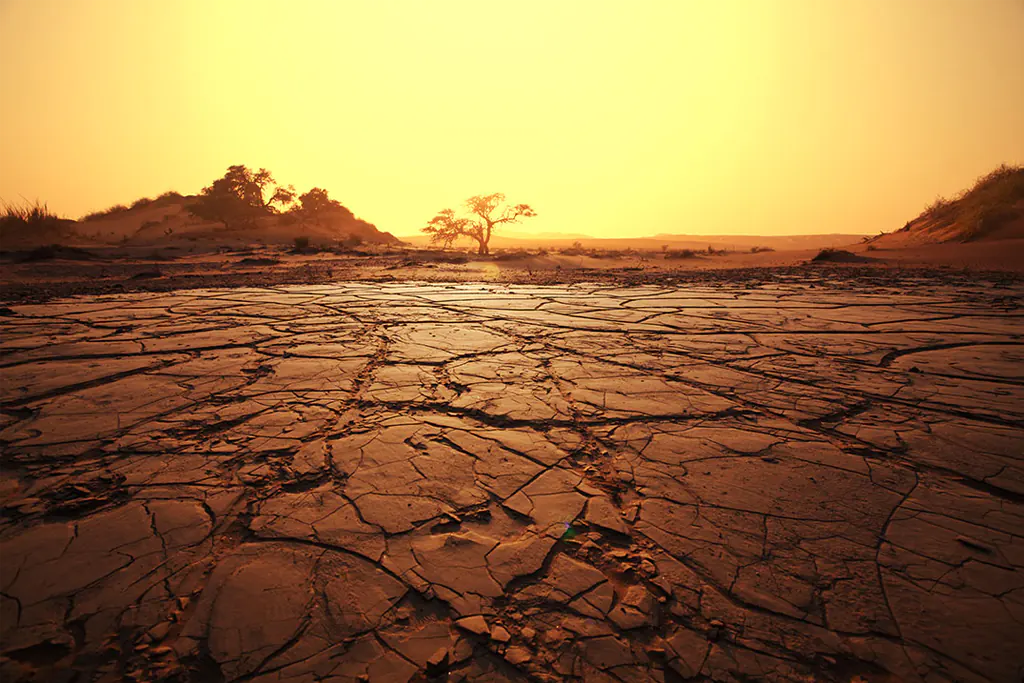
NOT even one of the 82 provinces across the archipelago would be spared from an imminent drought that would hit the country next year, says the Department of Science and Technology (DOST).
According to DOST Secretary Renato Solidum, the entire country will experience drought by the end of March next year with the anticipated ‘very strong’ El Niño.
HARDLY ANY RAIN
Solidum said that drought is expected to prevail for three consecutive months with way below normal (60% reduction from average) or five consecutive months of below normal (21%-60% reduction from average) rainfall condition.
“The effects are being felt but it can get worse next year based on the amount of rain that will happen,” Solidum told Palace reporters in a press briefing.
“And I’d like to reiterate again, how we will be affected by it is dependent on how much preparation we have and the conservation of water that we will do,” he added.
President Ferdinand Marcos Jr. earlier presided over a meeting with his Cabinet on Monday to discuss the government’s response to the impact of El Niño to various sectors.
DESTROYED FARMS
At least 106 cities and municipalities and five provinces have already declared a state of calamity in view of the supposed effects of the phenomenon.
The agriculture sector alone has already incurred losses amounting to P6.8 billion, affecting 249,000 hectares of agricultural lands.
In response, the Department of Agriculture assured that there will be sufficient supply of rice and other agricultural commodities despite expected losses in harvests.
NEED FOR FUNDS
The agency likewise confirmed having requested Congress for a P45-billion supplemental budget to augment its efforts in mitigating the effects of El Niño to farmers and fisherfolk.
“Out of the 45 billion, na-releasan na kami ng 6.2 billion we’re implementing now. I would believe there would be another P10 billion coming for solar irrigation, solar pumps, and solar erators and additional biofertilizers,” Agriculture Secretary Francisco Tiu Laurel said.
“For 2027, meron nang nailagay kami with the help of Congress na 10 billion of the Presidential Assistance for Farmers and Fisherfolk,” he added.
WATER CRISIS
Environment and Natural Resources Secretary Juan Miguel Cuna hinted at the strong possibility of a water crisis, for which he urged the public to “conserve and recycle water.”
“Historically, ang all-time low natin in 2019 was 157 meters. I’m talking about Angat Dam which provides 90% ng water supply dito sa NCR. Pero this year, noong July, nag-150 pero kung napapansin ninyo, hindi po tayo nagkaroon ng water interruption,” Cuna said.
The agency may issue a directive to local government units to implement “strict” water conservation measures, according to Cuna.
“Rainwater harvesting, ito po ay matagal na pong pinag-uusapan. In fact, nagtataka ang marami, sa dalas po ng ating mga bagyo that were not able to save water. Sayang po ang natatapon na tubig,” he added.
Meanwhile, the Local Water Utilities Administration, for its part, vowed to continue looking for new water sources within local water districts.
VULNERABLE SECTORS
The Department of Health for its part hinted at tapping barangay health workers to help monitor vulnerable sectors such as pregnant women and senior citizens.
“Tayo nga po ay inatasan ng ating Pangulo na gumawa po ng information campaign hindi lamang po ng mga posters kung hindi po talaga to reach out even mga bahay-bahay po iyong ating mga barangay health workers para ipaliwanag po iyong mga kailangang gawin para nga po maiwasan ang komplikasyon ng ating El Niño,” Health Secretary Edwin Mercado told newsmen.
The OCD added that they will monitor possible increase in forest fires with the threat of ‘Super’ El Niño.