

MARTIAL Law of the father of the current Philippine president, aside from undermining democratic socio-political institutions, had also reared its ugly heads on the local Tin Pan Alley.
In those days, music and recording were required to toe the line of the regime’s authoritarian policies adhering to the state censorship preserve them but anything against it would otherwise mean threats, intimidation and harsh punishment such as business closure, civil defense notice or imprisonment and other sanctions were imposed.
Although its musicians didn’t take the censure sitting down, it wasn’t easy expressing dissent to injustice, inequality, militarization and impunity.
As it was, there were ways to skin the cat.
Not all the New Society’s propaganda materials were taken hook, line and sinker.
The articulation in arts and culture, particularly music, was subliminal in the delineation of the real social and political conditions of the country.
Celeste Legaspi, Symbolist Persuasions
Manila sound, for one, the precursor of Original Pilipino Music (OPM), had sent diverse messages not only romantic but socio-cultural realities in its contents.
Celeste Legaspi might be a popular singer of traditional love songs but she sang and still sings as well tunes of nationalist, naturalist and symbolist persuasions.
Coritha’s songs told of nature’s refuge and love of the environment as well as Lolita Carbon, Mike Pillora, Jr. and Cesar Banares’ Asin.
Rico J. Puno might have waxed Taglish version of Barbra Streisand’s “The Way We Were” but he infused in his adaptation ordinary quotidian experiences of budget constrained dates among lovers in Luneta promenade while Hajji Alejandro spoke of the untypical sad realities but positive values like the loftiness of Filipino music in “Kay Ganda ng Ating Musika” etc.
Not content with versions of sweet love songs, Kuh Ledesma recorded “Noong Unang Panahon,” a piece she sang in the ethno-rock musical “Tales of the Manuvu” its libretto penned by the future National Artist Bienvenido Lumbera and music composed by Nonong Pedero.
In the 50s and 60s, it was the mushy, saccharine anthems but the advent of protest songs in the 70s and 80s, aside from the ones popularized by Tambisan sa Sining, Susan Fernandez-Magno, Chikoy Pura, Jess Santiago, Joey Ayala, Inang Ina of Karina Constantino-David and Becky Demetillo, among others, meanwhile took different strokes in the sounds generated by folk singers Heber Bartolome, Florante de Leon, Freddie Aguilar, Mike Hanopol etc.
Martial Law Musicality
The diversity of musicality during Martial Law was purportedly the golden age of OPM that borne a cornucopia of performing artists.
Watching and listening to them at this time brings back the romantic and didactic sentiments of the baby boomers.
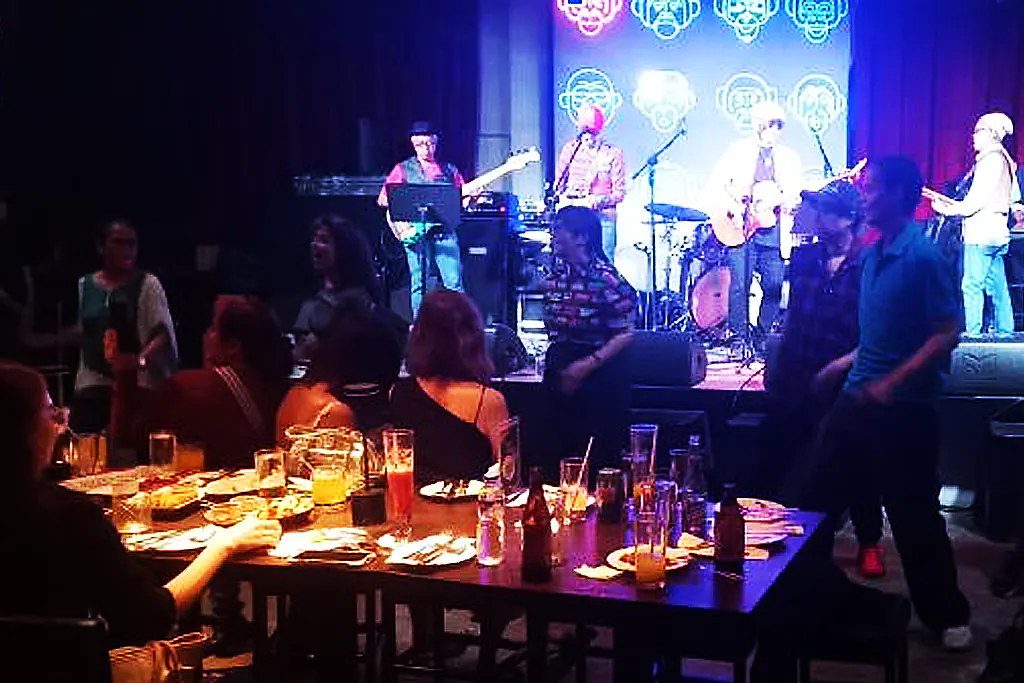
Normina Budoy, a songstress from Lopez, Quezon who worked as an entertainer in Japan for a decade in the 80s and 90s, invited me to a gig of the pop group BoyFriends (“Dahil Sa Iyo,” “Nais Kong Malaman Mo, “Sumayaw, Sumunod” etc.) billed as the BeeGees of the Philippines at the 12 Monkeys Bar in Estancia Mall in Pasig City.
Normina’s husband Lito Cachapero is the keyboardist of the group mainly composed of the original members like Gary Arriola and Bob Guzman with Lloyd Sale.
Joey Abando and Artie Ilacad already left the group some years back.
It was indeed a reunion not only of the members but the dancers and followers of the band as well.
Spotted at the audience was ex-Wea Dancers’ choreographer Miles Borin (nee Obra) and other attractions of terpsichorean talents of their era.
Ballroom dancing aficionado Aida Posadas was also around.
Aside from drinks and boozes, aperitifs and other bar munchers, it was dancing and reminiscing time for BoyFriends and guests.
Miles Obra as an Icon
According to Miles, she misses the height of disco music provided by BoyFriends whom she and colleagues danced with on TV.
Obra-Borin is in the country for a vacation and a series of shows to reunite with former singing and dancing buddies.
Miles is US-based and she’s married to an Italian.
Meanwhile, commitment to the audience is one factor BoyFriends is still active singing and gyrating around.
“Hanggat kaya pa (As long as we can still do it),” quipped Gary on BoyFriends’ durability.
“Hanggat may sumusuporta pa (As long as there are supporters),” he added.
BoyFriends had stirred nostalgia anew recently at VPOP Live, Ayala Malls, Manila Bay, Aseana City.
Nonoy Zuniga and Folk Music
To debut onstage, to reintroduce or reprise an act, to take a bow and to thrive in their art, new and veteran folk singers, or simply, performers, gathered at the reimagined My Brother’s Moustache in Quezon City recently to relive not only the 70s or 80s music but the contemporary beat as well in the gig titled “That Old Folk.”
The likes of Rene Vega, Henry Samaniego, Paul Galang + 4 and the Working Class Band, Albert de Pano, Noel Esquela, Erwin Guevarra, Pido Lalimarmo, Bobby Mondejar with Friends, Maribeth Velardez, Jesse Bartolomea, Lito Crisostomo, Gabby Cristobal, Ed Arcilla, Archie Martinez, Corky & Kiko Wally Singson Boy Collado and Joey Uquia with Joey Ayala, Marc Velasco, Lester Demetillo, Nonoy Zuniga, Buklod with Rene Boncocan and Rom Dongeto and Becky Demetillo-Abraham played one after the other to the delight of the audience.
“Ano lang ‘yon (It’s only like this), reunion ng mga (of) folk singers,” said Henry, brother of the pretty soprano Sweet Samaniego Buchanan.
Samaniego said that most of his fellow musicians at the gig are folk singers. “Si Nonoy, nagsimula ‘yan sa folk singing bago nagbanda at nag-pop (He started with folk singing before he joined a band and went pop).”
Were they paid to sing in the concert?
“Walang (There’s no) talent fee ito (here) when we performed,” he clarified.
Is he in particular hoping to secure a slot to sing in the bar. “Siyempre, umaasa rin kami na magkakaroon ng puwesto roon (Of course, we also hope we would be given a schedule to sing there),” he disclosed.
“Kasi, sina Joey naman, si Nonoy at ang iba pa sa kanila, may mga regular nang kinakantahan ang mga ‘yan (It’s because they already have regular singing engagements),” explained Henry.
“Ang mahalaga rito, napapraktis kami at nakakanta ulit namin ang mga musika ng 1970s at 1980s. Maraming may gusto n’yan (What is important is we are honed and able to sing again the music of the era. There are many people who dig it),” he assured confidently.