

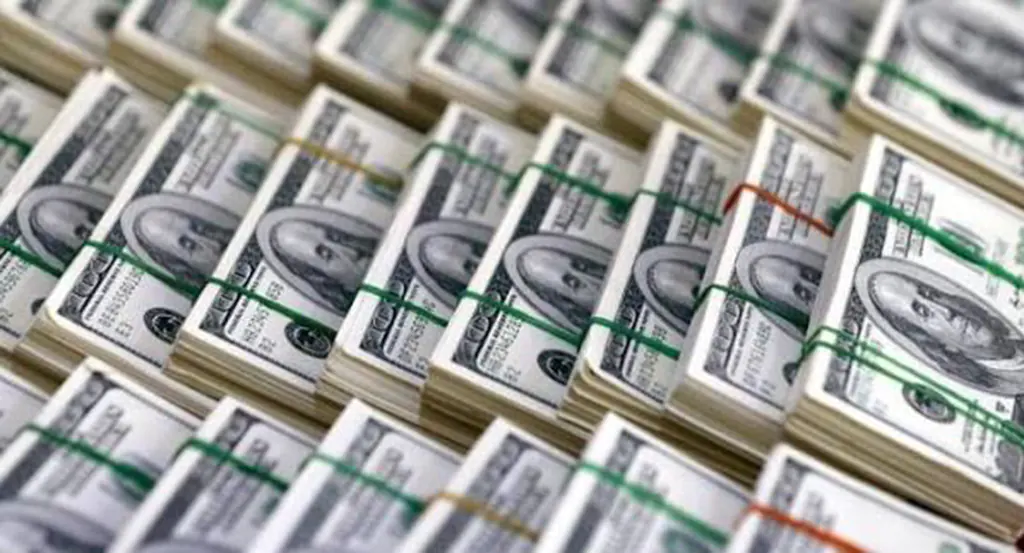
FOR THE first nine months this year, the country’s dollar reserves that are used to pay dollar-denominated loans, support the peso from a freefall and pay for goods and services, has plunged to a three year low to $99.997 billion in September.
The Bangko Sentral ng Pilipinas (BSP) projects the foreign reserves to decline to $104 billion for 2026, from the $110 level in 2025, according to a report which appeared in the Business World.
The Philippines’ dollar reserves plummeted to its lowest level in three years at end-September since BSP used its reserves to manage foreign exchange market volatility while the peso weakened.
In the last nine months, the country’s gross international reserves (GIR) fell to $99.997 billion, down 8.31% from the $109.06 billion a year ago, preliminary BSP data showed.
The figure was the lowest GIR level in three years or since the $98.116 billion logged in September 2023.
September also marked the seventh straight month that the GIR contracted annually.
Month on month, the country’s dollar reserves declined by 4.62% from $104.846 billion.
The BSP said its reserves shrank because of its net foreign exchange operations, especially as the peso depreciated further in September.
The reescalation of the Middle East war, coupled with domestic inflation woes and the Federal Reserve’s tightening, dragged the peso to hit new record lows six times in September.
The peso plunged to its weakest finish against the greenback of P62.86 on Sept. 14, before slumping to its worst intraday low of P62.925 on Sept. 15, data from the Bankers Association of the Philippines showed.
As of end-September, the peso has slumped by P3.85 or 6.15% from its P58.79 finish on Dec. 29, 2025.
The BSP uses the country’s foreign reserves by releasing US dollar liquidity when intervening in the foreign exchange market amid episodes of peso depreciation.
The GIR decline was also due to “downward valuation adjustments, primarily driven by changes in the prices of the BSP’s gold holdings and foreign currency–denominated reserve assets,” the central bank said.
The reserves’ fall also came after the national government reduced its foreign currency deposits with the BSP to pay its external debts, with its total withdrawals also exceeding its deposits during the month, the central bank added.
International reserves are the central bank’s foreign assets held mostly as investments in foreign-issued securities, foreign exchange and monetary gold, among others.
These are supplemented by claims to the International Monetary Fund (IMF) in the form of reserve position in the fund and special drawing rights (SDRs).
Despite falling below $100 billion, the latest dollar reserves level remains ample to protect the country from market volatility and ensure that it can pay its debts in case of an economic downturn, according to the BSP.
“The latest GIR level provides sufficient foreign currency to meet the country’s import needs, service its external debt obligations, and serve as a buffer against external economic shocks,” it said.
Based on latest data, the end-September reserves could cover about 3.2 times the country’s short-term external debt based on residual maturity.
It also translates to 6.3 months’ worth of imports of goods and payments of services.