

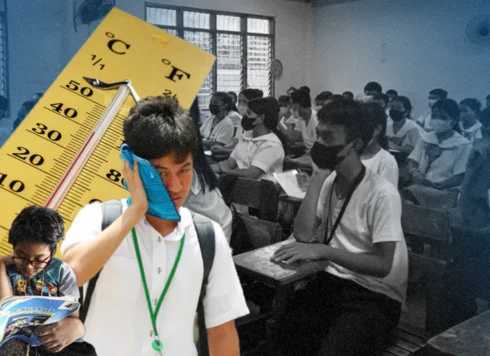
CITING science-based studies which tend to show severity of the so-called Super El Niño, the Department of Education (DepEd) hinted at a four-level response system if only to ensure safety of teachers and students alike.
Education Secretary Sonny Angara said that the four-level response system will allow schools to modify class schedules, reduce academic requirements or suspend academic activities depending on the severity of extreme heat and water shortages.
According to Angara, such a system is designed to cushion effects of a potentially strong El Niño threatening to disrupt school year 2026-2027 classes.
The Philippine Atmospheric, Geophysical and Astronomical Services Administration (PAGASA) previously issued an advisory on potentially strong to very strong El Niño conditions that could peak before the end of 2026 and persist through the first half of 2027.
“We must prepare early to protect learners and keep education services going despite climate-related disruptions,” Angara said.
The four-level framework — Hayo, Hinay, Hinga and Hinto — is expected to guide schools and community learning centers in responding to local conditions.
Under Hayo, face-to-face classes will continue with precautions such as scheduled water breaks, moving outdoor activities to cooler hours or shaded areas, and allowing flexible attire.
Under Hinay, schools may adopt modified class days alongside structured home-based or hybrid learning.
Under Hinga, academic demands will be substantially reduced, with schools relying on supplementary learning materials and short literacy and numeracy activities.
And finally under Hinto, academic activities will be suspended when heat index conditions become unsafe. Schools will maintain essential communication, safety checks and psychosocial support referrals.
“We are giving our school heads and division superintendents the practical flexibility to exercise sound judgment based on actual ground conditions, classroom ventilation, and water availability,” Angara noted.
The guidelines will also require schools to assess water supply, classroom heat, electricity reliability and fire hazards. Schools must also prepare contingency menus for feeding programs, maintain stocks of shelf-stable food and coordinate food sourcing with local government units and agricultural cooperatives.
The guidelines will likewise allow teachers and learners to wear light, breathable clothing, including official DepEd collared shirts and physical education uniforms. Schools must monitor classroom temperatures and humidity and maintain cross-ventilation.