

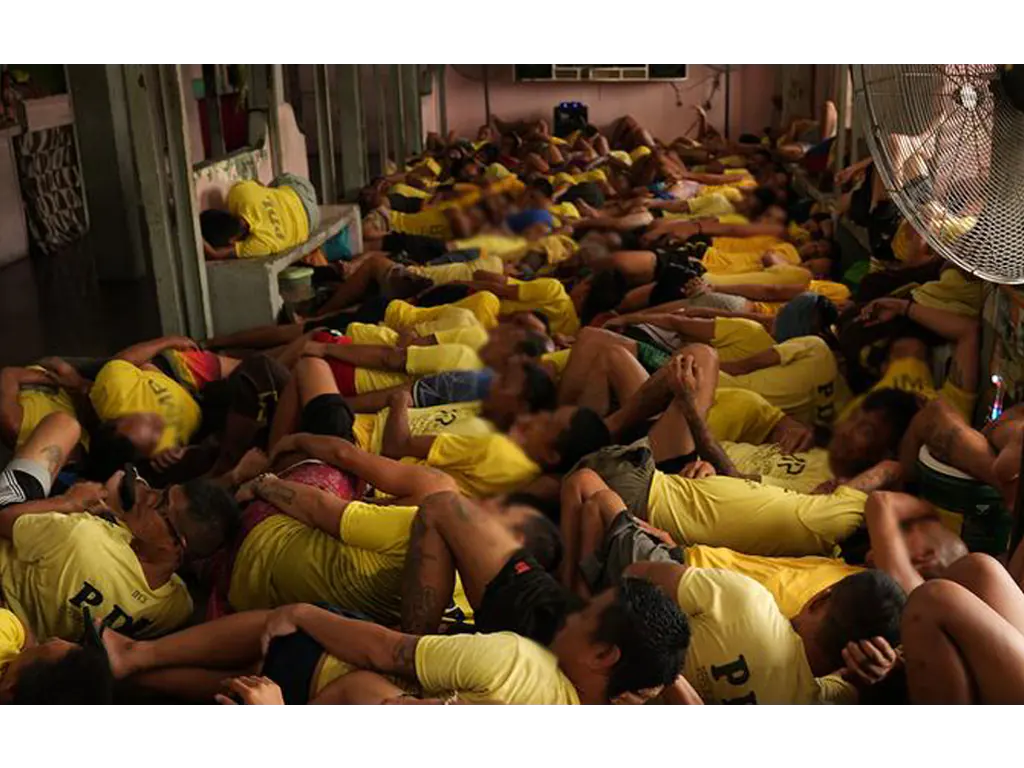

TO DECONGEST THE country’s jail facilities, the Supreme Court wants to adopt house arrest, medical confinement and community-supervised release as alternatives to detention and allot a compassionate section for offenders who are old, sick or otherwise entitled to compassionate and humanitarian release upon serving the minimum term imposed on their sentence.
These measures were highlighted during a recent speech of outgoing Chief Justice Alexander Gesmundo at the Justice Sector Coordinating Council Summit, as part of his legacy programs in the High Tribunal before reaching the mandatory retirement age of 70 on November 6.
Gesmundo also spearheads SC’s reform agenda, dubbed “The Strategic Plan for Judicial Innovation 2022-2027” aimed at reviewing and assessing the organizational structure and operations at the various offices of the judiciary for the delivery of responsive and real time justice.
He said the SC is amending its rules and procedures concerning detention and release to include house arrest, medical confinement, or community-supervised release, as well as the section on compassionate release for offenders who are old, sick, or otherwise entitled to compassionate or humanitarian release upon serving the minimum term imposed.
He added: “The Department of Interior and Local Government, through the Bureau of Jail Management and Penology, has strengthened its paralegal and case-monitoring efforts, ensuring that when the pressure to serve the minimum sentence is applied, the paperwork for release is already on the judge’s desk. Indeed, each measure belongs to a particular institution. Yet, together, they address different points along the same process.”
The Supreme Court is also updating its section on compassionate release, targeting elderly or ill inmates—and those who have served their minimum terms—for humanitarian release.
“Behind every statistic is a person whose liberty is at stake, a family awaiting the return of a loved one, or an individual on the road to a new beginning,” Gesmundo said as he noted that prison congestion is far more than an administrative issue.
The planned judiciary rules come as part of a synchronized effort with the Department of Justice (DOJ) and the DILG.
Gesmundo said this coordinated strategy has already successfully reduced the national jail congestion rate by double-digit percentages.
While the Supreme Court tackles bail, detention and release procedures, other agencies are addressing bottlenecks at different stages of the process.
“Congestion could not be understood, much less addressed, as a problem belonging to the correctional system alone,” he explained as he pointed out that delay causes stem from various points in the justice chain—from initial investigation and prosecution to case resolution and final release.”
Realizing that his term is nearing end, Gesmundo said he hopes that that the sector will continue to build on these collaborative foundations: “Our institutions are strongest when they are secure in their own mandates, faithful to their constitutional boundaries, yet open to understanding how their work connects with the work of others.”
The country’s prison and jail system is currently in a severe and chronic overcrowding state that leads to health challenges, though recent reforms aim to improve such conditions.
Philippine correctional facilities are among the most congested globally, frequently operating at several hundred percent of their intended capacity.
A large percentage of those locked up are unconvicted individuals waiting years for their court cases to finish due to delayed judicial processes and strict rules on drug-related charges.
The aggressive anti-drug campaigns that began in 2016 dramatically inflated inmate populations, as nearly 70% of incarcerated people face drug-related offenses.
Tight spaces force detainees to sleep in cramped, humid conditions with minimal room to lie down. This scarcity extends to basic needs like clean water, proper ventilation, and sanitation.
Overcrowding accelerates the spread of communicable diseases. Efforts have been made recently—such as partnering with the International Committee of the Red Cross (ICRC)—to roll out standardized health information and recording systems in Bureau of Jail Management and Penology (BJMP) facilities.
International bodies like the UN Office on Drugs and Crime (UNODC) are assisting the Philippines with bail reduction strategies, drug policy reforms, and prioritizing the release of vulnerable groups like elderly prisoners.
Newer facilities, such as the Marawi City Jail inaugurated in 2014/2024, are beginning to incorporate international guidelines like the UN Nelson Mandela Rules to promote safer, more dignified conditions.