

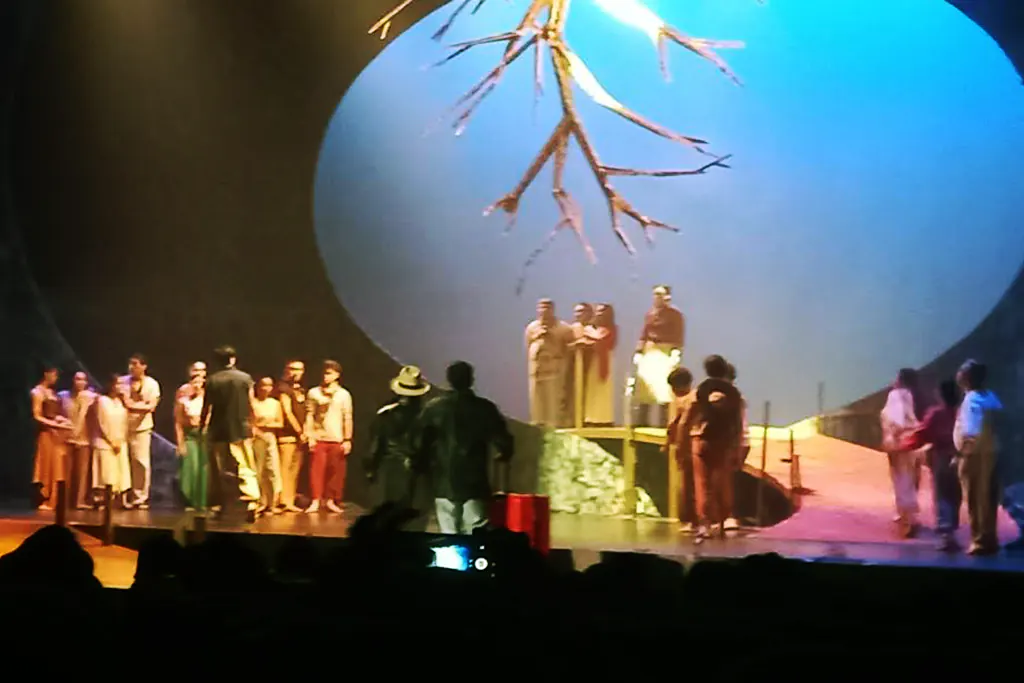
AFTER the press preview of the so-called ethno-pop-rock modern zarzuela “Ambon, Ulan, Baha” at the Metropolitan Theater on a Saturday afternoon, I didn’t waste time clarifying from its librettist Frank G. Rivera so I looked for him pronto at the lobby.
The moment I saw him, I didn’t mince words: “Ano ang bagong in-inject mo sa version ngayon (What are the new ideas that you injected in your current version?).”
“Ambon, Ulan, Baha” has been staged many times since 1976 in various venues all throughout the country and there were some mutations here and there, according to Rivera.
Fifty years hence, there are still new scenarios thought out, specifically by the author and when necessary, the director (although most at the helm of the musical is the writer himself) who set the tone, adapted and implemented them.
“’Yong Pax Silica at ‘yong demonyo (Pax Silica issue and the devil),” Rivera quickly responded.
The latest outing of “Ambon, Ulan, Baha” was directed by CJ Andaluz of Pixel Art Media Productions who did another entertaining yet informational theater experience.
The Devil (portrayed by theater icon Anton Juan) was indeed the most powerful character in the play this time around because He personified the corruption, destruction, disruption and evaporation of a promised land from the face of the earth, nearly.
Don Calixto (initially essayed by Juan), the powerful, shrewd and greedy logging concessionaire (who stripped off the once pristine, luscious, verdant and virginal whole Barrio Mangubat of its natural beauty and bounty) was transformed into the most despised antagonist in flaming red and black garb as Satan.
The villagers, nonetheless, had stayed vigilant to fight the evils, the wrongdoings and the causes of corruption in the flooding of their beloved land.
This is a prophetic stage play that needs to be restaged again and again as a reminder of threats of flash floods, landslides and disasters of nature of all types if we as a people (read: audience of the musical and the non-audience as well) don’t refrain from quarrying, denuding the mountains, indiscriminately throwing plastics and other non-biodegradable waste materials on the streets and waterways, being timid and reactionary about political maneuverings destroying our habitat etc.
Frank was right to be indignant if not passionate about the effects of his masterpiece to the current problems of water crises and flood control controversies.
“It takes fifty years for us to discover the value of the play. If it’s not for the corrupt leaders and bad governance, we wouldn’t be experiencing these catastrophes. Because of the flood control scams, our houses are drowned, our properties are torn to pieces, human lives are lost and we are reduced to nothing,” summed up emphatically, more or less, from Frank’s remarks at the gala night of his opus.
It’s a good move to present Rivera at that point in time because he is the genius behind the literary prophecy and we the audience are the be-all and end-all to be moved, hopefully, by the musical.
There were dragging parts, though, especially if they were only exchanges of flimsy dialogues or minor playfulness of some characters but saved by the sharp and contrasting views of the nipped-in-the-bud co-parents-in-law Kapitan (Barangay Chairman) Berto (Nazer Salcedo) and Mang (a term of endearment to an old man or an elderly male) Pedro (Only Torres) on leadership and management of the ecology of the countryside and their respective alliances—the ambitious and materialistic chairman who sides with the oppressive Don Calixto whose son Dr. Anton (Rendell Sanchez) is forcefully matched and raped Inday (Thea Astley) and Pedro who upholds the rights of his barrio mates over their ancestral land while his son Nonoy (CJ Navato), a well-intentioned person in an ill-fated love with his childhood sweetheart Inday.
The music of Pipo Cifra is engaging and the singing talents of the cast, mainly Astley and Navato, are encouraging and illuminating to unleash the theme and focal point of the story—preservation of heritage in all its glory.
Although the rendition of T’boli indigenous songs by Manlilikha ng Bayan singer Rosie Sula were precious as the land the natives toil.
Sula’s music is like a lullaby to cool and soothe the listeners by bringing them to rusticity, love of nature and protection of the environment.
Before the curtain rose for “Ambon, Ulan, Baha,” I was excited to see what special effects the production could employ by showing the floods and raindrops onstage only to see a giant white cloth enveloping the whole stage to signify waters covering the entire community which was understandable yet doable, creative and practical to showcase the virtual, visual and visceral effects on a limited production budget.