

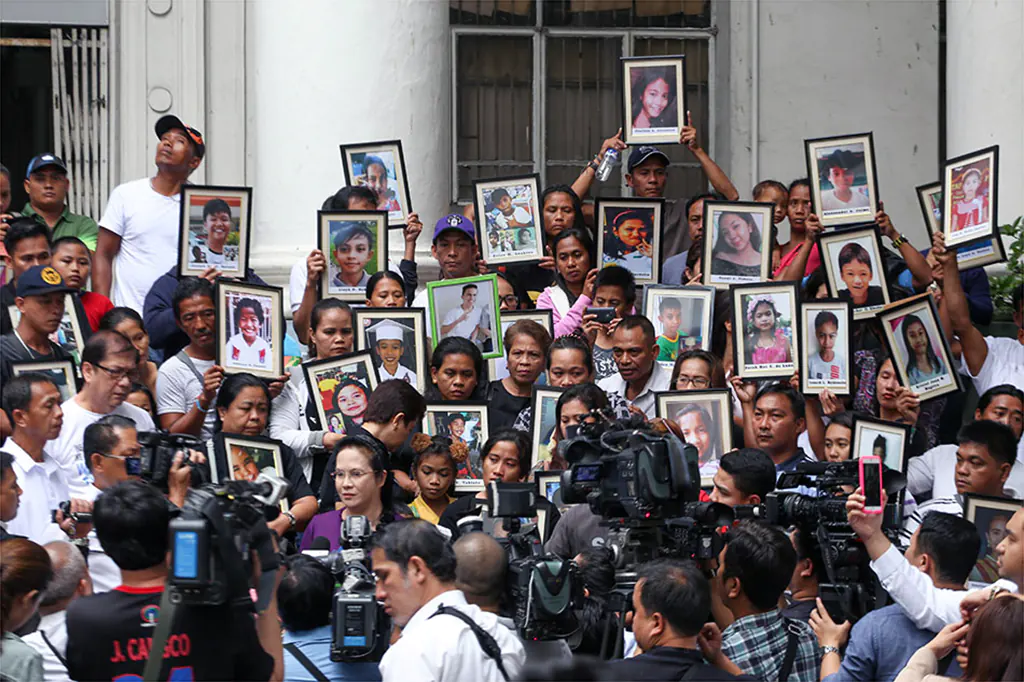
ELEVEN long years of legal battle don’t seem enough guarantee to secure justice for children who died after being injected with Dengvaxia vaccines.
This comes as the Sandiganbayan Second Division acquitted former Health Secretary Janette Garin of graft charges in connection with the P3.5-billion procurement deal for Dengvaxia vaccines in 2015.
These vaccines, according to previous news reports, were the same doses which were used in the government’s school-based immunization program.
Aside from Garin, likewise cleared from criminal charges were former Health Undersecretaries Gerardo Bayugo and Kenneth Hartigan-Go, as well as former officials of the Philippine Children’s Medical Center (PCMC).
The charges stemmed from the agency’s procurement of the anti-dengue vaccines for a school-based immunization program.
Garin and four other officials were accused of conspiring to realign government funds for the purchase of Dengvaxia, which had not yet been included in the Department of Health’s (DOH) Expanded Program on Immunization or listed in the Philippine National Drug Formulary.
The Office of the Ombudsman filed graft and technical malversation charges against the officials before the Sandiganbayan over alleged irregularities in the procurement.
Garin has since denied illegally diverting government funds to purchase the vaccines, even as she argued that the allocation had been approved by the Department of Budget and Management (DBM) and covered by a Special Allotment Release Order (SARO).
Meanwhile, Hartigan-Go previously denied promoting Dengvaxia despite having worked for a foundation linked to the vaccine’s distributor.
“We never promoted any product, advertised or sold through the foundation,” said Hartigan-Go, who served as executive director of the Zuellig Family Foundation from 2001 to 2009.
Meanwhile, Garin, now a congresswoman representing Iloilo in the House of Representatives, welcomed the decision, saying the acquittal vindicated the work of scientists and public health experts who supported the dengue vaccination program.
“Natutuwa kami. This is a win not for me but for our scientists and experts,” Garin said.
“Our researchers, scientists and public health experts continued to attend the hearings in this case. We understand that there are anti-vaccine advocates, but we cannot neglect our duties or the vaccination effort because vaccination saves lives,” she added.
The Dengvaxia controversy erupted in 2017 after French pharmaceutical company Sanofi Pasteur disclosed that the vaccine could increase the risk of severe dengue among individuals who had not previously been infected with the virus.
The government eventually suspended the dengue immunization program, which had already covered hundreds of thousands of schoolchildren — some of whom have reportedly got sick and died.